RED Powers Epic Cinema’s Multi-Camera Capture Of David Guetta’s “The Ultimate Monolith Show”
22 RED cameras — Komodo-X, V-Raptor, and V-Raptor XL [X] — ran simultaneously across three sold-out nights at Stade de France in June, capturing David Guetta's "The Ultimate Monolith Show" for a combined audience exceeding 240,000.
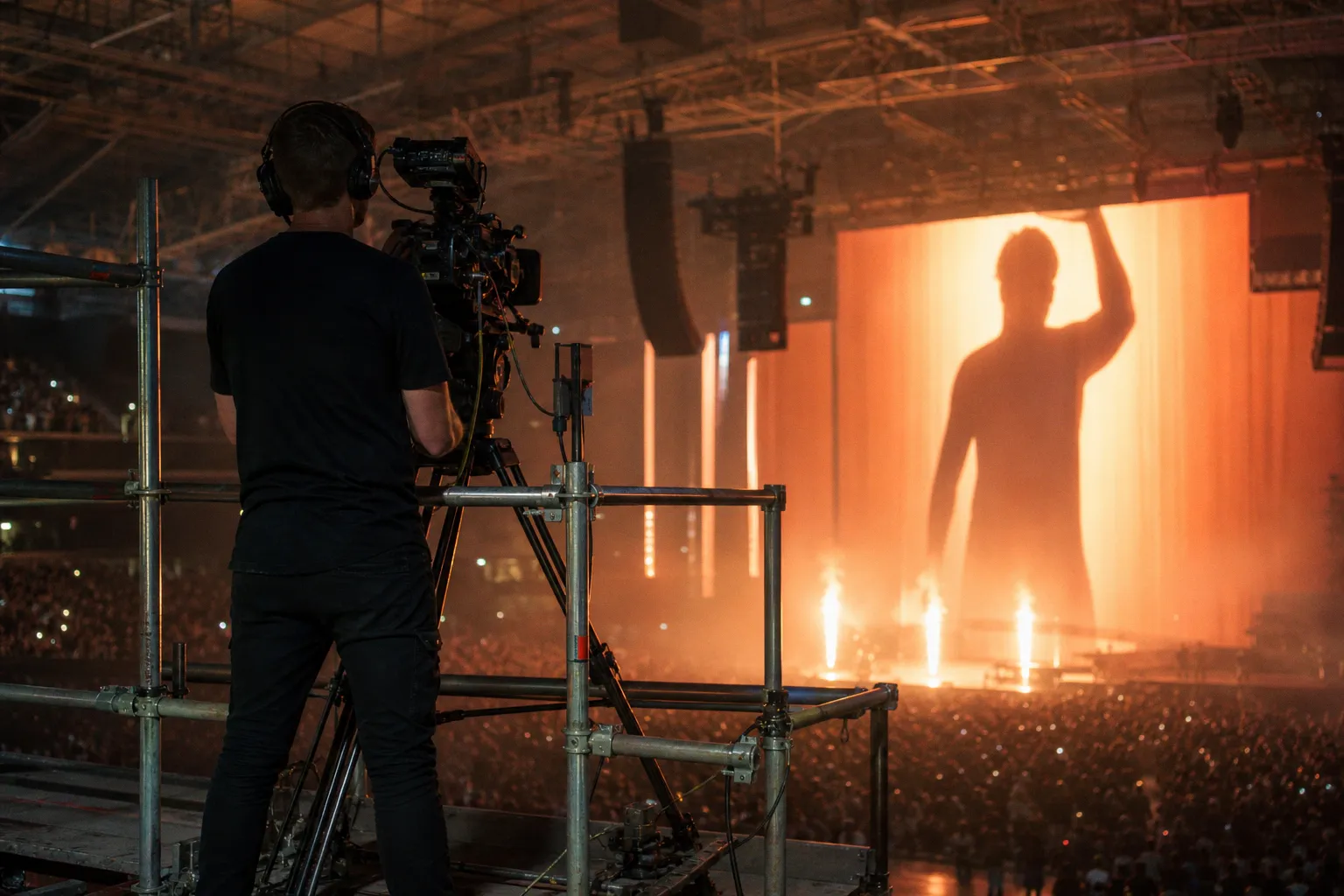
The 22-Camera Layout
Epic Cinema's rig was predominantly Komodo-X and V-Raptor bodies. V-Raptor XL [X] systems handled the Cine-Broadcast live output feeds — the ones feeding the switching desk and venue IMAG screens. Multiple unmanned RED units were mounted on and around the DJ booth and stage architecture, operated remotely to avoid intruding on the physical set design.
Feeds from all 22 positions ran back to a central production control room. There, they were colour-matched in real time and switched for live projection. The claim from RED's EMEA sales head Andy Newham: global shutter and low-latency output made the cameras "ideally suited" to a stadium-scale live event with complex LED lighting.
One detail worth noting: Verlinde cited dynamic range as the primary technical requirement. The staging relied heavily on direct-view LED surfaces, creating high-contrast environments where clipped highlights or crushed shadows are a genuine risk during live IMAG. Whether the Raptor sensors actually held detail across those extremes — or whether aggressive on-set exposure management compensated — isn't documented in the available reporting.
Cine-Broadcast: What It Actually Does
RED's Cine-Broadcast system splits the signal path. The same camera body outputs a broadcast-ready feed (likely via SDI, though exact signal specs weren't provided) for live switching and projection, while simultaneously writing high-resolution RAW to onboard media for post. This eliminates the traditional compromise: one camera chain for live, another for cinematic acquisition.
In practice, this let Epic Cinema support on-site highlight editing and rapid content turnaround — near-live packages cut and delivered while the RAW files remained untouched for the eventual documentary and official aftermovie. Two deliverables, single camera source, no duplicate rig.
The technical caveat: "broadcast-ready" in RED's context doesn't mean SMPTE-standard broadcast engineering. It means colour-matched, real-time compatible output. Whether the feeds were gen-locked, frame-accurate, and latency-tolerant enough for true live television (not venue IMAG) remains an open question. Stadium IMAG tolerates higher latency and less rigorous synchronisation than broadcast playout.
What to Watch
- RAW fidelity vs. live output quality. The compressed feed and the RAW file from the same sensor will look different. How much latitude the post team had in grading the archival footage — and whether the RAW files revealed issues the live feed masked — would be genuinely useful technical data.
- Unmanned camera reliability. Remote operation at scale introduces failure points: signal drop, thermal management, lens drift. No failure rates were reported.
- Codec and data rates. 22 cameras recording RAW across multiple nights at 4K+ resolution generates staggering data volumes. Storage architecture and backup redundancy for this deployment weren't discussed.
Verlinde called the event "a career milestone." RED's Newham described "staggeringly unique experience." Both are marketing language. The hard numbers — 22 cameras, three nights, 240,000+ attendees, Cine-Broadcast in a live stadium context — speak for themselves. Whether the workflow holds up under scrutiny outside RED's own promotional ecosystem is the question worth tracking.