Sony rumors 2026 - Camera rumors in 2026: what cameras are coming, officially and otherwise! - Page 4
A global shutter FX body is the key rumor to watch. Digital Camera World reports that Sony’s next serious cinema move may not be an FX3 II, but an FX5 positioned higher in the stack, with alleged…
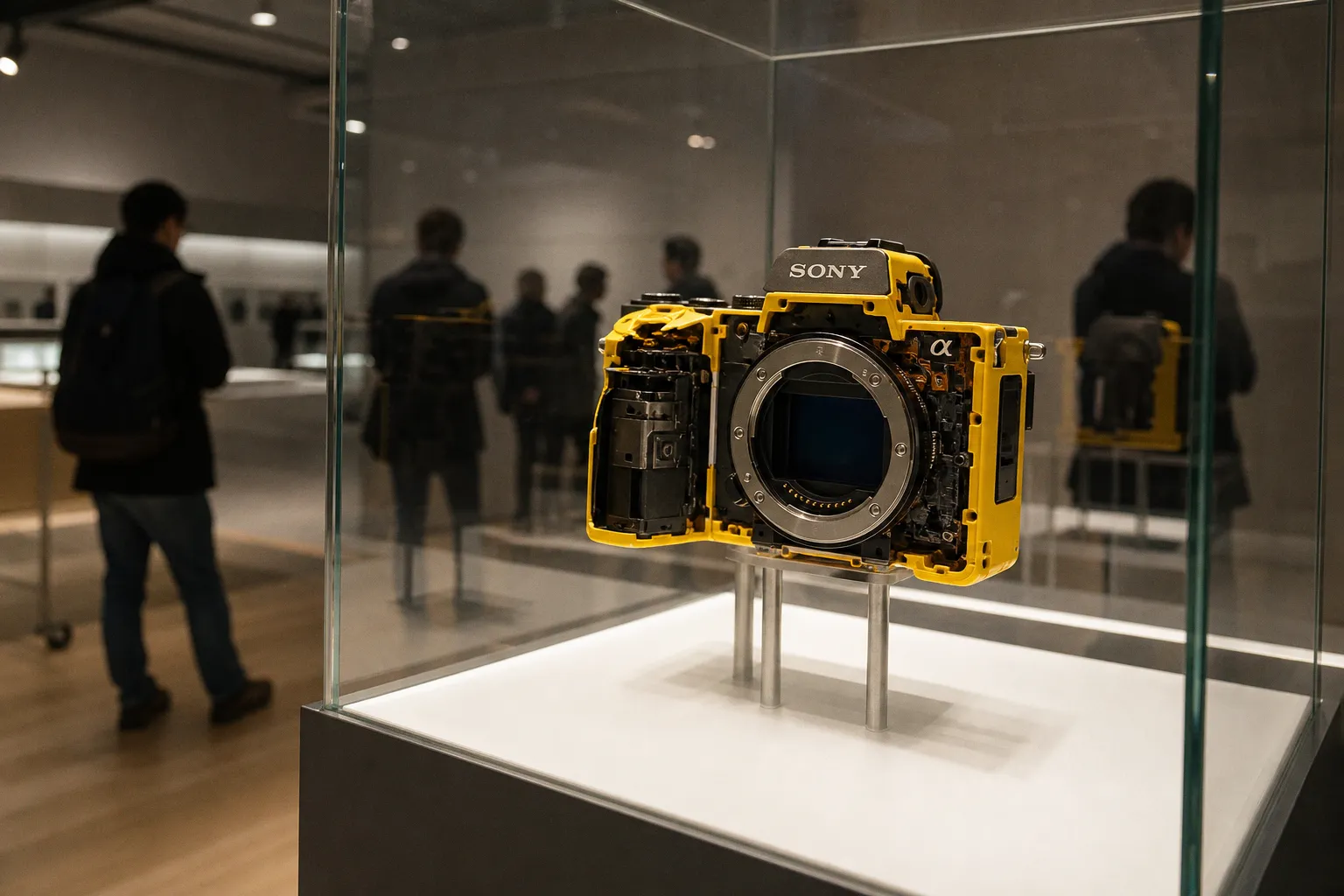
A global shutter FX body is the key rumor to watch. Digital Camera World reports that Sony’s next serious cinema move may not be an FX3 II, but an FX5 positioned higher in the stack, with alleged Venice-line influence, modular hardware, and possible open-gate capture. Treat that as unconfirmed. But for camera teams planning 2026 purchases, the signal is clear: do not price the next Sony body as a simple FX3 refresh.
FX5 rumor: the spec that changes the buying logic
Digital Camera World says the rumored Sony FX5 is expected to be revealed in July and has been described as a “mini Venice.” The report points to a body language influenced by Sony’s higher-end cinema line, with modularity for add-ons such as EVFs and XLR handles.
The technical claim that matters is the reported global shutter image sensor. If that ships, the camera would move out of the usual rolling-shutter compromise zone. That affects whip pans, LED walls, flash, fast practicals, and vehicle work. It also changes how crews judge FX3-class rigs against larger cinema bodies.
Open-gate video is also being hinted at in the same report. Again: not confirmed. But if true, that would matter for reframing, vertical deliverables, anamorphic workflows, and mixed-aspect distribution. It would be a post-production metric, not just a capture headline.
Practical read: wait before committing to an FX3-centered upgrade if your work involves motion artifacts, multi-format delivery, or heavy rigging. If you only need compact full-frame acquisition with known tolerances, the rumor is not a reason to freeze a working kit.
RX fixed-lens signal: Sony may be looking below Alpha
The same report says Sony has registered a new camera certified as a “digital camera,” not an “interchangeable lens digital camera.” Digital Camera World interprets that as likely pointing to an RX fixed-lens model.
Two candidates are raised: a successor to the RX100 VII, or a replacement for the RX10 IV. The source says it has heard this will actually replace the RX10 IV, a bridge camera that has been on the market for almost a decade.
For production teams, the RX10 line is not about shallow depth of field or lens swapping. It is about controlled convenience: one lens, compact footprint, long range, fast deployment. ENG-style pickups, BTS, travel units, and low-friction corporate work are where that class still earns its keep.
The report also notes renewed interest in compact cameras and says the bridge segment has seen a renaissance, with Nikon’s Coolpix P1100 named as the only major new release in that category. That makes the RX10 rumor commercially plausible, but not verified.
Practical read: if you need a fixed-lens utility camera now, do not assume a Sony replacement is guaranteed. If your current RX10 IV is still serviceable, the rational move is to delay non-urgent replacement until Sony clarifies the registration.
A6200, vlogging bodies, and the crowded APS-C shelf
Digital Camera World also reports that a Sony A6200 was originally expected in summer and is said to use the same 26MP image sensor as the Sony A6700. That sensor is also cited as being used in the ZV-E10 II.
This is where the product logic gets tight. A6200, A6700, and ZV-E10 II would overlap for creators who shoot hybrid stills/video, tabletop, talking-head, and compact gimbal work. The difference would need to come from body controls, stabilization, heat behavior, I/O, and price — none of which are confirmed in the supplied material.
The vlogging camera category is described as increasingly noisy, with Sony doubling down on content creation. Separately, digitalmore.co carries a headline saying DJI’s Osmo Pocket 4P delivers pro filmmaking capabilities and advances the gimbal camera category DJI pioneered. No further details are available from that source text here, so the only safe point is competitive pressure: compact creator cameras are not just fighting other mirrorless bodies anymore.
Practical read: audit the job, not the launch cycle. For locked-off talking heads, the sensor alone is not the spec. Check HDMI behavior, audio path, rolling-shutter tolerance, heat limits, battery endurance, and rig clearance. For handheld creator work, also compare against stabilized pocket cameras once confirmed specifications are available.
Verdict: wait on Sony cinema-body purchases if global shutter or open gate would change your pipeline. Do not wait if your current work only needs proven APS-C or fixed-lens coverage. Rumor is not a deliverable. Specs are.