PHOTOMIX Project: Integrating Portable Raman Sensors and High-Speed Stimulated Imaging for Multimodal Data
PHOTOMIX launched June 1. An EU Horizon Europe imaging platform built around Raman spectroscopy, coordinated by CyRIC in Cyprus, runs 42 months across twelve institutions.
Technical Core
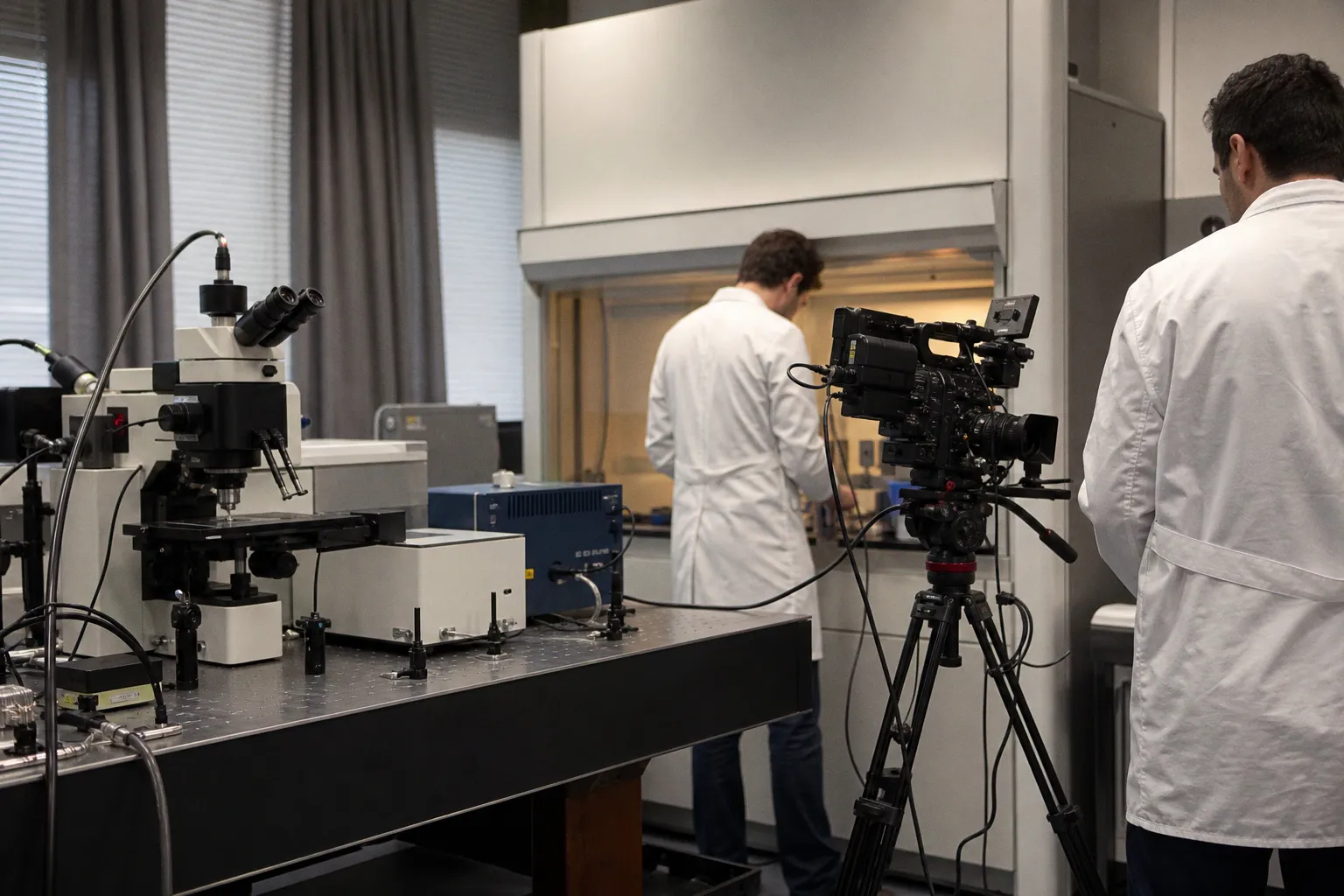
The project integrates two distinct modalities into a single platform. First: a low-cost, portable Raman imaging sensor for routine screening. Second: a novel high-speed stimulated Raman imaging sensor for higher temporal resolution. Stimulated Raman relies on two synchronized laser beams to coherently excite molecular vibrational modes, yielding signal levels orders of magnitude above spontaneous Raman — which is why acquisition times drop from seconds to milliseconds. That gap changes what's operationally possible in field conditions.
Data fusion across modalities is augmented by machine learning. Different sensing modes return different signal-to-noise ratios, spatial resolutions, and spectral coverage. The claim is that combining vibrational data with morphological information produces richer output than any single mode alone. Skepticism applies: multimodal fusion systems frequently hit diminishing returns once you move past two modalities, and alignment tolerances between sensors become the bottleneck. PHOTOMIX explicitly targets broadband spectral coverage, which helps distinguish chemically similar compounds — a measurable advantage in mixtures.
Use Cases
Three application tracks are defined in the source materials. Medical: a dual-mode system for in-vivo fast-screening of suspected patients, aimed at objective disease staging and grading. Environmental: portable microplastics detection and classification in drinking water, with retrieval of both physical and chemical properties. Industrial: polymer biodegradation analysis in aquatic environments to support development of biodegradable materials.
These are not cinematography applications. They are, however, sensor development programs that produce imaging hardware and ML pipelines likely to filter into adjacent markets. Hyperspectral imaging has been creeping into production cameras for years. Projects like PHOTOMIX push the underlying component technology — narrower-band lasers, better detectors, faster data pipelines — that eventually shows up in cinema-adjacent tools.
Why It Matters Here
Direct relevance to working cinematographers: limited today. Indirect relevance: real. The institutions involved — TU Wien, Leibniz-IPHT, Politecnico di Milano, Université Gustave Eiffel — publish sensor research that feeds commercial supply chains. If PHOTOMIX yields practical high-speed Raman modules at cost points lower than current lab equipment, expect ripples. Medical and environmental sensing standards tend to migrate into broadcast and cinema equipment within five to ten years. The relevant metrics to watch are cost-per-sensor, frame rate at usable signal-to-noise, and spectral resolution in stops equivalent terms.
Verdict
PHOTOMIX is a research instrument project, not a product announcement. No shipping hardware, no price, no availability timeline. The 42-month runway means practical outputs land in late 2029 at earliest. Track it for component-level breakthroughs, not finished tools. The interesting technical question is whether the stimulated Raman module hits the throughput targets the consortium is claiming — that single metric will determine whether the multimodal architecture is justified or just adds cost.