Best Cameras for Content Creators & YouTubers in 2026
A mid-2026 creator-camera roundup from Analytics Insight names six models across APS-C, full-frame, and fixed-lens categories. The methodology is technically grounded — sensor class, autofocus behavior, stabilization architecture, I/O.
Sensor Class and Latitude
The Sony ZV-E10 II opens the APS-C tier with oversampled 4K and Real-time Eye AF, but ships without IBIS — a deliberate design choice that pushes the operator toward a gimbal workflow. The smaller sensor surrenders usable latitude in low foot-candle environments versus the full-frame options below.
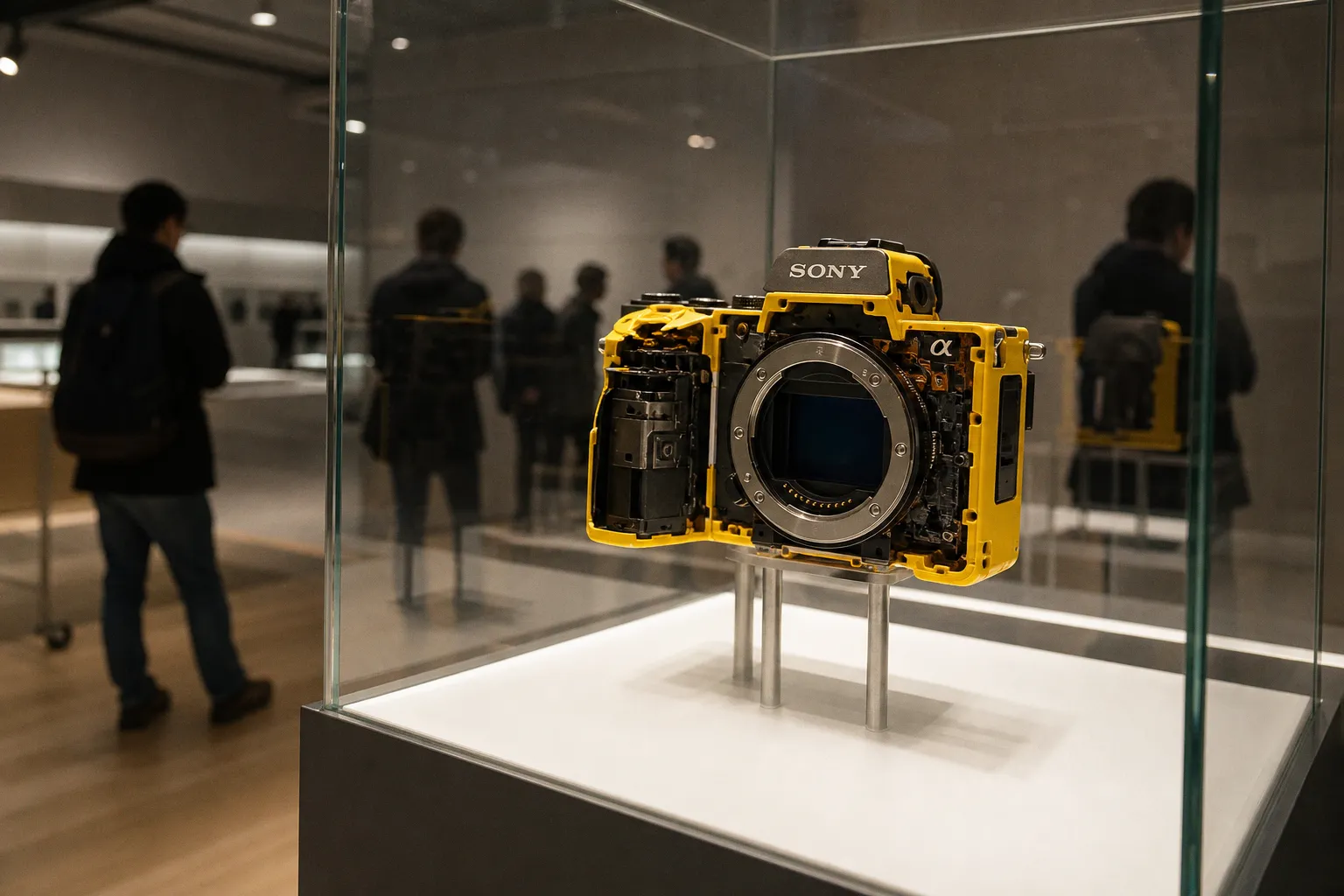
Sony's ZV-E1 jumps to full-frame with AI subject detection, 5-axis stabilization, and 4K recording. Battery life registers at category average — a hard cap on continuous-run shoots. Canon's EOS R6 Mark II matches it: full-frame sensor, oversampled 4K, persistent face/eye tracking. Its real cost sits in the RF lens ecosystem. Price glass before body.
Canon's R50 V stays APS-C with Dual Pixel CMOS AF, 4K capture, electronic IS, and livestream-ready I/O. The Fujifilm X-M5 occupies the same APS-C slot with Fujifilm color science and digital stabilization. The stabilization is not IBIS-grade — flag as a stated limitation, not a defect.
Three Stabilization Architectures, Three Costs
Electronic IS crops the sensor — a real latitude penalty at IRE-midtones and a framing cost at wide angles. IBIS preserves sensor area while introducing micro-vibration in select handheld scenarios. Mechanical gimbal stabilization, as implemented in the DJI Osmo Pocket 4's built-in 3-axis unit, delivers the most stable capture of the three architectures. The fixed-lens design ends any focal-length switching workflow.
For walk-and-talk formats and travel vlogging, the Pocket 4 outperforms every interchangeable option on residual motion. For creative focal-length work, IBIS is the only architecture that does not crop framing.
Where the Market Is Fragmenting
A parallel InsightTrendsWorld piece on the "PocketTrio" tracks a dedicated creator-device category: retro aesthetics, multi-lens configuration, wireless phone integration. MSN simultaneous coverage positions 2026 phones as primary creator tools. The categories are fragmenting. Hybrid shooters now run a dedicated body for B-roll and primary recording while routing short-form vertical output through a phone.
Operational checks before purchase:
- Price the full lens ecosystem, not body-only
- Match sensor class to your lowest-light shoot, not your brightest
- Verify CIPA battery rating against longest continuous record, with 20% reserve
- Audio preamp gain matters as much as jack count
- Confirm gimbal integration if IBIS is absent
- Demand rolling-shutter data and usable IRE range from the manufacturer — neither appears in the roundup
The ZV-E1 and R6 Mark II earn their premium on low-light latitude and depth-of-field control. Every other entry is feature parity. Pay mid-tier money for mid-tier specs.