Panasonic LUMIX GH7 from Panasonic - hybrid video camera pushes ProRes RAW and phase detect AF
Panasonic's GH7 ships with a 25.2-megapixel Live MOS sensor and a phase detection AF system that recognizes humans, animals, vehicles, and motorcycles.
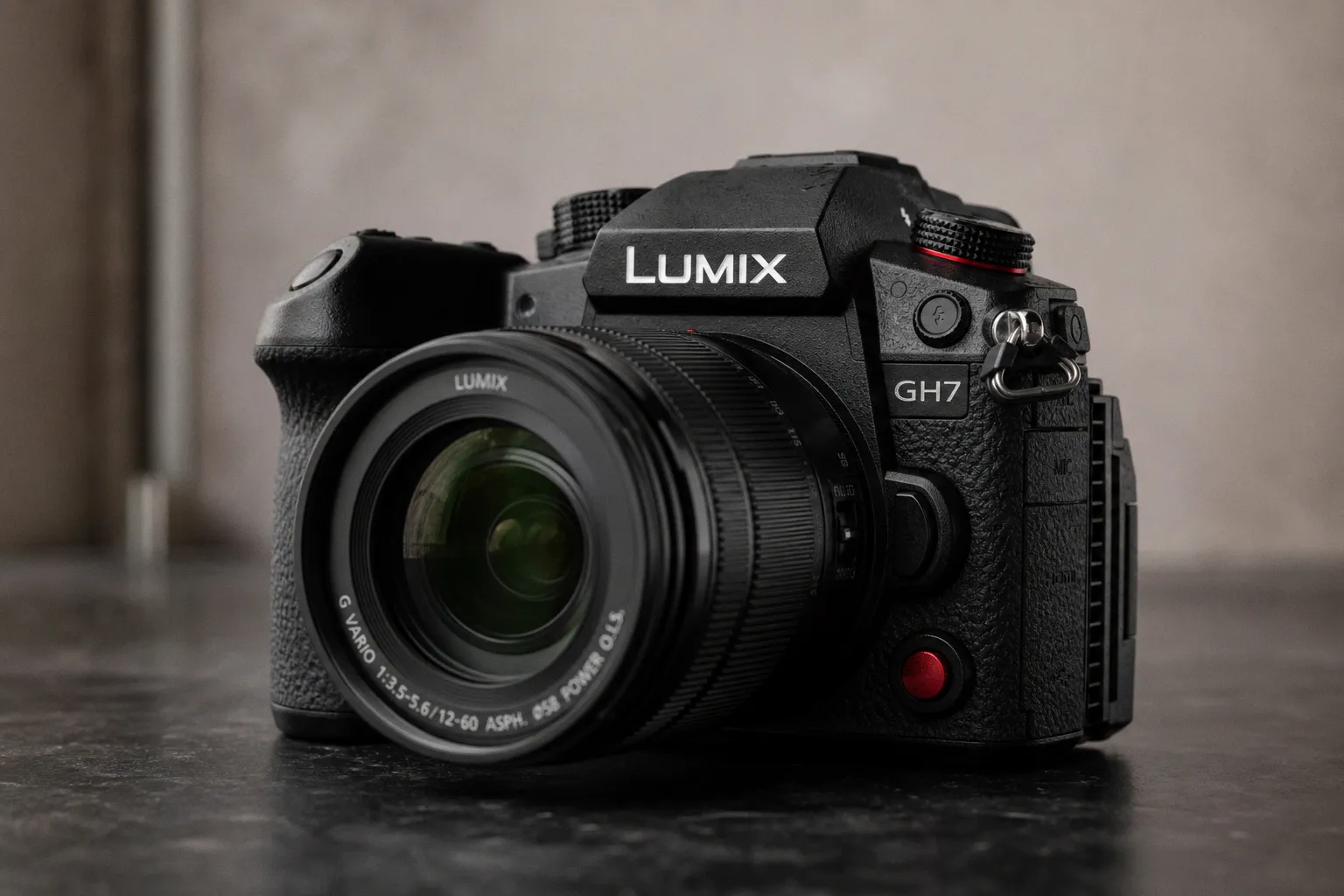
Phase Detection Finally Hits Micro Four Thirds
Codec Stack and Recording Pipeline
The dual-card architecture splits workload: CFexpress handles ProRes 422 and ProRes RAW at up to 5.7K resolution, while SD slots manage H.264 and H.265 for lower-bitrate proxy or standard capture. The Venus engine processes both paths. For a typical 4K 60p ProRes 422 shoot, footage goes straight from card to Final Cut or DaVinci Resolve without transcoding — a workflow advantage over cameras that still require external Atomos recorders for comparable codec access.
Panasonic also includes 32-bit float audio recording through an optional XLR adapter, which suggests the company is targeting run-and-gun documentary and event shooters who need extended dynamic range on the audio side without a separate field recorder.
Thermal Management and the "Unlimited" Claim
Panasonic claims unlimited record times under typical ambient temperatures, assuming sufficient power and card capacity. A brief test under constant softbox lighting showed the body warming after an hour of continuous 4K capture but not triggering thermal warnings. The menu system displays remaining card space and temperature status in real time.
That said, "unlimited" depends entirely on ambient conditions, power supply, and codec selection. Shooting 5.7K ProRes RAW on a sealed CFexpress card in direct summer sun is a different thermal scenario than a controlled studio environment. The fan-assisted design carried over from the GH6 is doing work here, but the claim warrants stress testing before relying on it for unattended event coverage.
What to Verify Before Committing
The AF system is the real variable. Panasonic's DFD autofocus had measurable limitations in continuous tracking — especially with off-center subjects and low-contrast backgrounds. Phase detection should resolve breathing artifacts and lock-acquisition delays, but independent lab benchmarks comparing the GH7's tracking hit rate against the GH6 and competing PDAF bodies from Sony and Canon aren't published yet. If your workflow depends on reliable face and eye tracking for gimbal or handheld work, wait for third-party AF latency and accuracy tests before upgrading.
The $2,199 body-only price also demands scrutiny. Full-frame options from Sony and Canon have established color science and lens ecosystems at similar or lower price points. The GH7's advantage is internal ProRes RAW on a Micro Four Thirds body — a niche that matters if you're already invested in MFT glass and want to eliminate external recording hardware from your rig.