Best Webcams 2026: Our Tested Picks for 1080p, 2K, and 4K
A 1/1.28-inch sensor. A 4K/60fps capture. AI-powered face-tracking. The 2026 webcam spec sheet reads like a mirrorless camera from five years ago. For cinematographers and content creators, the desktop is now a calibrated field monitor.
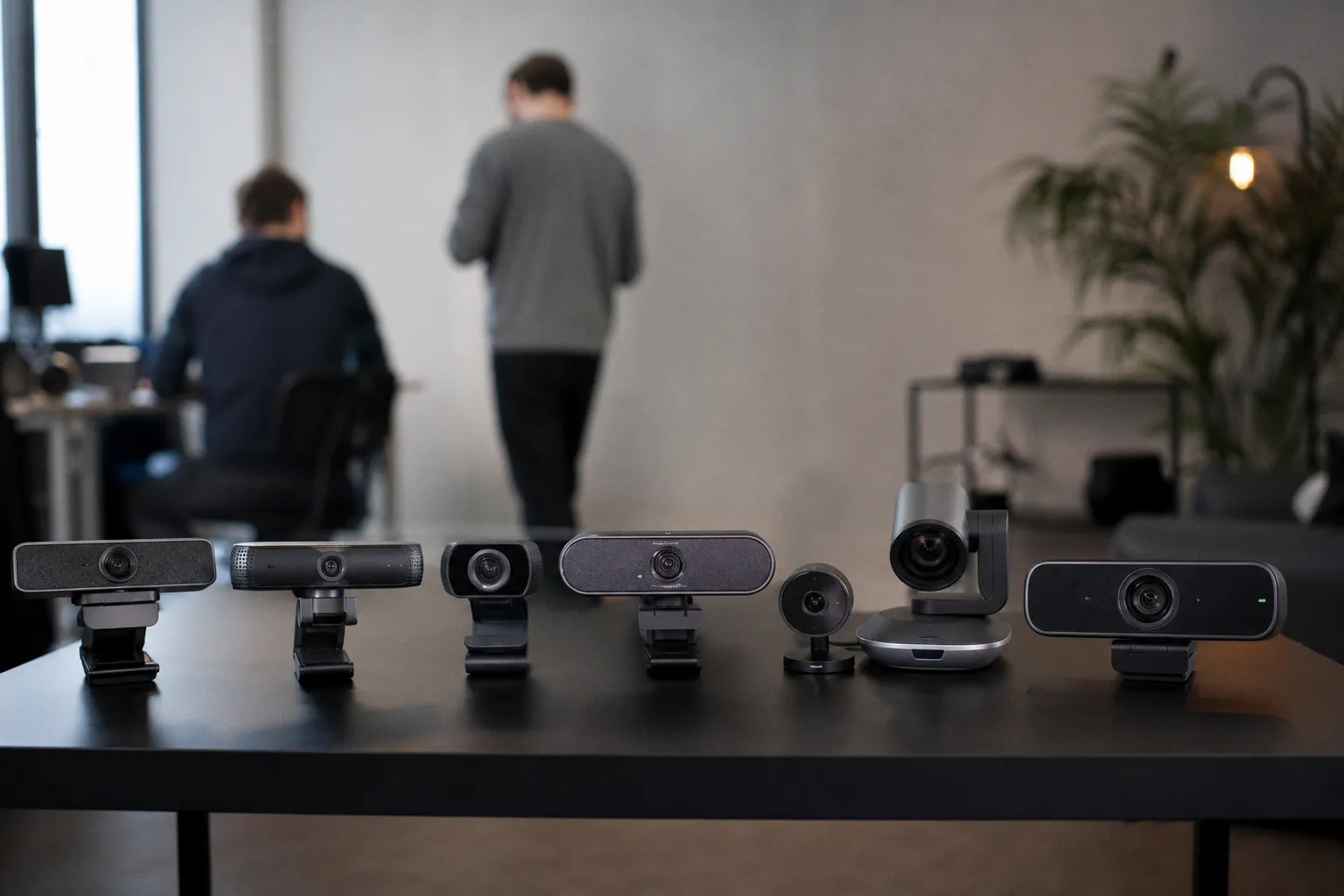
The Sensor Wars Come to the Desktop
The most significant trend is sensor size. The YoloCam S3 leads with a 1/1.28-inch sensor—a format typically reserved for enthusiast compacts. This directly impacts pixel pitch and low-light performance, pushing noise floors down. The Kiyo Pro Ultra counters with a large sensor and wide physical aperture (f/1.7), creating optical background separation, not software-driven bokeh. These are metrics that matter for controlled studio feeds and high-bitrate streaming.
Resolution Isn't a Simple Specification
Higher pixel counts are meaningless without context. The analysis confirms that Zoom, Google Meet, and Microsoft Teams cap at 1080p. Investing in a 4K unit like the YoloCam S3 or Logitech’s Brio 500 is for local recording, cropping flexibility, and future-proofing—not a guaranteed jump in stream clarity. The 2K segment (e.g., the WB5023) offers a middle ground for those requiring zoom headroom without the full 4K data burden.
The Auto-Exposure Test: Creators vs. Corporate
The standout in automated image processing is the Insta360 Link. Its 3-axis AI gimbal and superior auto-exposure are noted as best-in-class for color reproduction and tracking accuracy. For the remote worker, the Logitech Brio 500 (1080p/30fps) is flagged for its reliable white balance across mixed lighting—a critical tolerance for uncontrolled home offices. The sub-$60 Elgato Facecam Neo (1080p/60fps) delivers a solid 60fps baseline for conferencing but makes no pretenses about sensor performance.
Practical Takeaways
Your next camera is probably a webcam. Cross-reference the sensor specs (1/1.28" vs. 1/2.9") against your lighting control. If your pipeline includes post-production color grading, a model with a RAW or high-bitrate output (not mentioned in the source) would be the next technical hurdle. For multi-cam setups, uniform sensor performance is now a more critical spec than matching lens kits. The field has been reset.