GVM Z200B Studio Light Features Four Specialized Dimming Curves
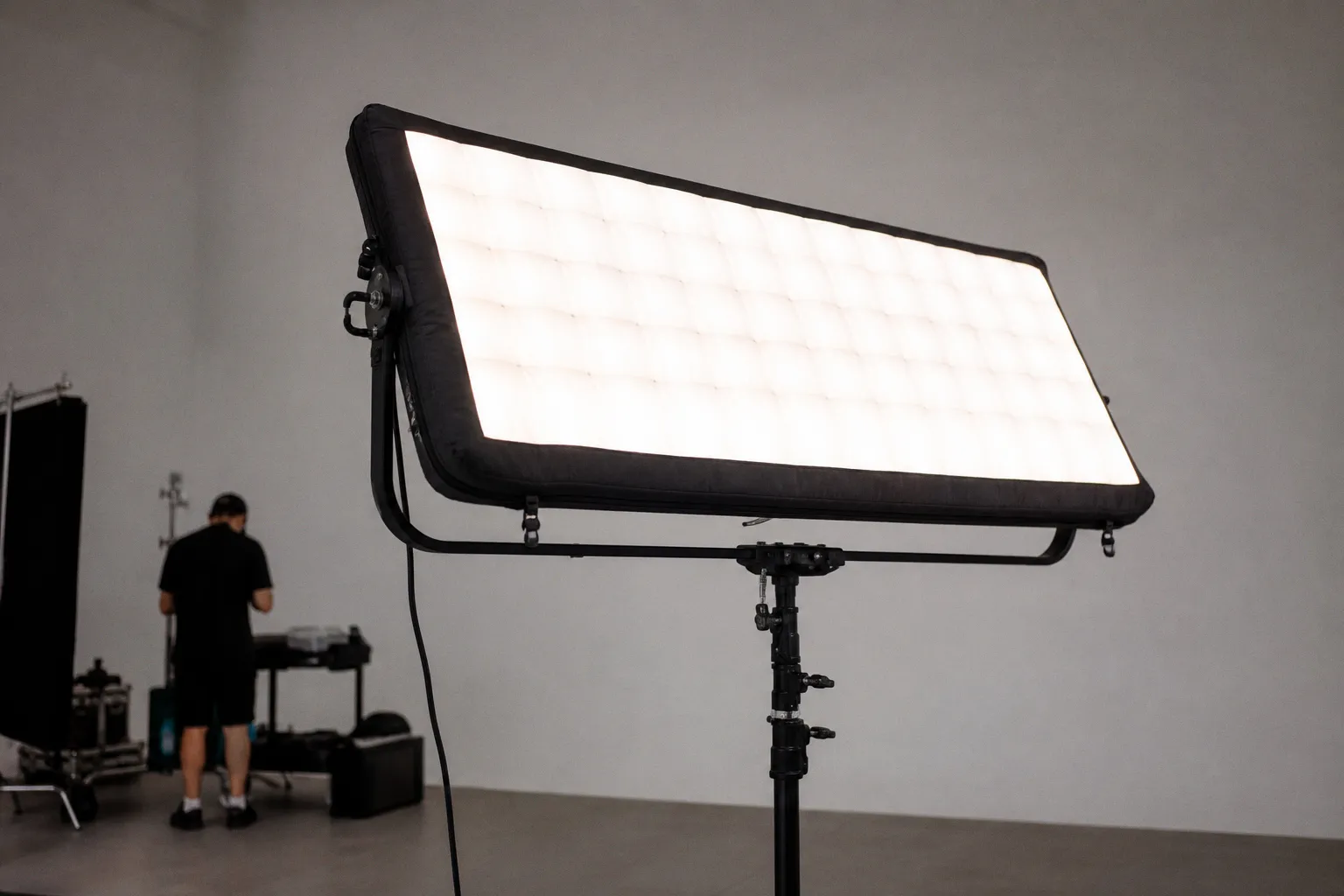
GVM has announced the Z200B, a studio fixture with a 26mm-thick housing and four user-selectable dimming curves: Linear, Exponential, Logarithmic, and S-Curve. The spec comes from GVM's own product page.
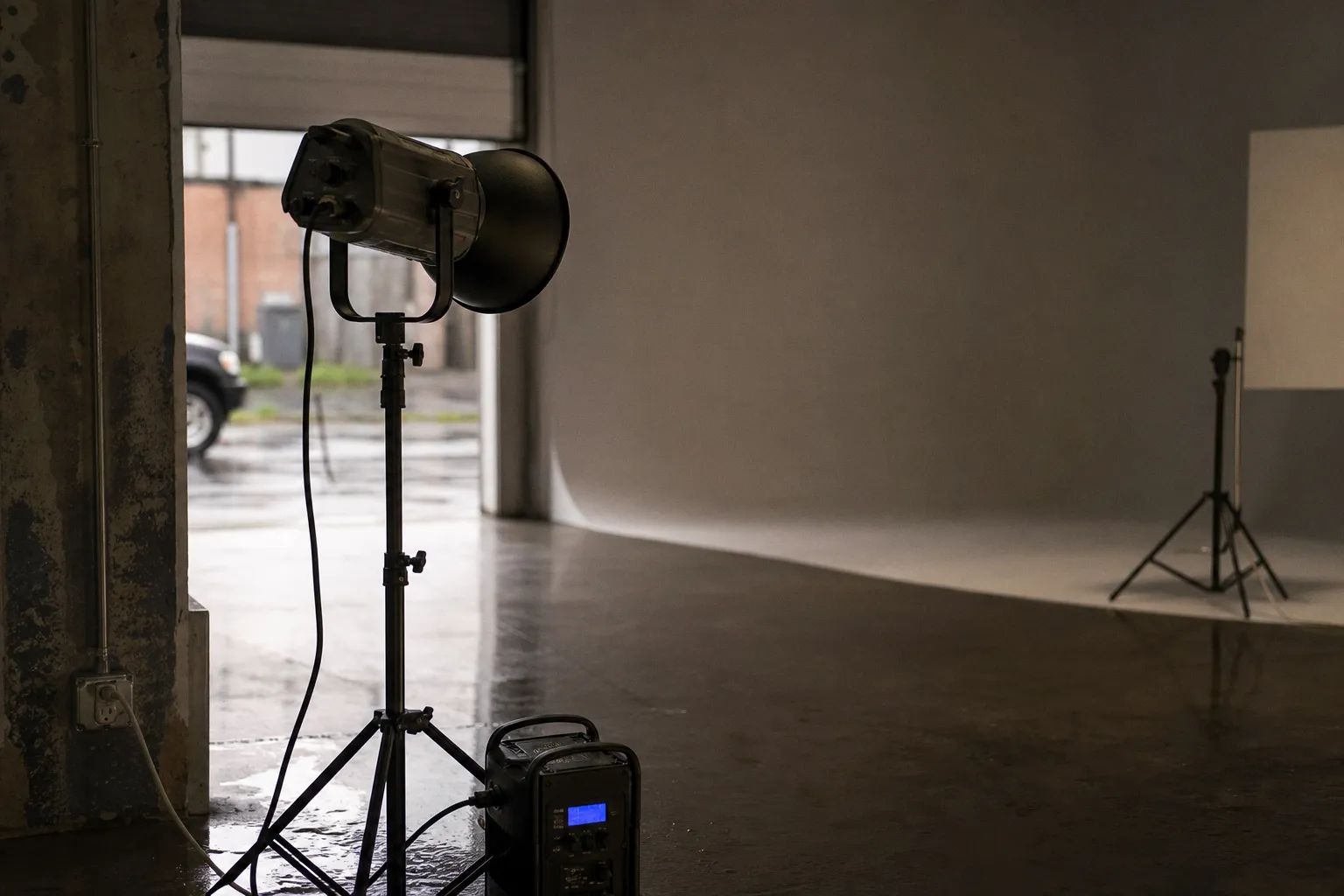
For lighting technicians who deal with flicker-sensitive exposures and repeatable fade-ins on set, the curve options matter — they determine how the LED ramp behaves between stops.
Dimming Curves: Why Four Profiles Is a Real Metric
Most budget and mid-tier panels ship with one dimming algorithm, typically linear. The Z200B's four selectable curves mean the operator can match the fixture's output ramp to camera shutter angle or post-production LUT expectations without external DMX interpolation. Linear gives uniform IRE steps across the 0–100 % range. Exponential front-loads the change in the upper register. Logarithmic does the opposite — fine control in the low end, where LED drivers tend to exhibit color shift and noise. S-Curve attempts a balanced bell profile. Whether GVM's implementation holds ±0.5-stop tolerances across those curves is unverified; the manufacturer's announcement provides no photometric test data.
26 mm Profile: Mechanical Trade-Offs
A 26 mm chassis is thin enough for overhead grid mounting in tight studios or car-rig work. Thinner housings typically mean smaller heatsinks. Thermal management directly affects LED bin consistency and chromatic aberration over long takes. GVM's materials do not specify ambient operating temperature range or derating thresholds. On a twelve-hour shoot day, that gap in published data is worth tracking.
What's Missing
The announcement omits several metrics that determine real-world utility:
- Wattage draw and output (lumens or lux at 1 m). The "200" in the model name may imply 200 W, but this is not confirmed in the available source.
- CRI / TLCI figures. Without them, color accuracy is an assumption.
- Color temperature range. The "B" suffix often denotes bicolor, but no CCT spread is stated.
- DMX / wireless protocol support. Dimming curves are most useful when remotely triggered.
- Price and shipping date. Not disclosed at the time of reporting.
No independent lab test has surfaced yet. Until third-party photometric data confirms the curve fidelity and thermal stability, the Z200B's four-profile dimming is a manufacturer claim — structurally interesting on paper, unverified under load.