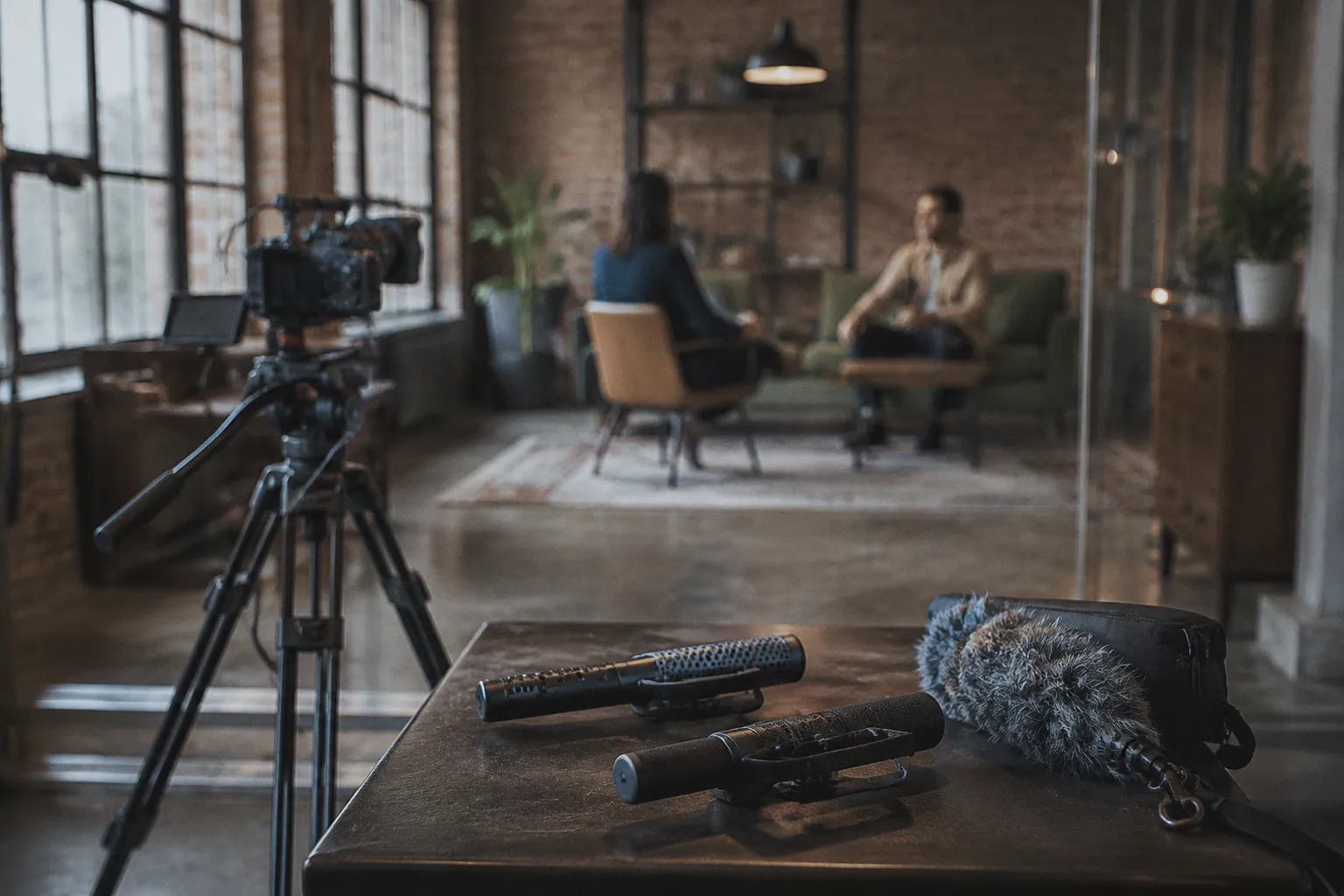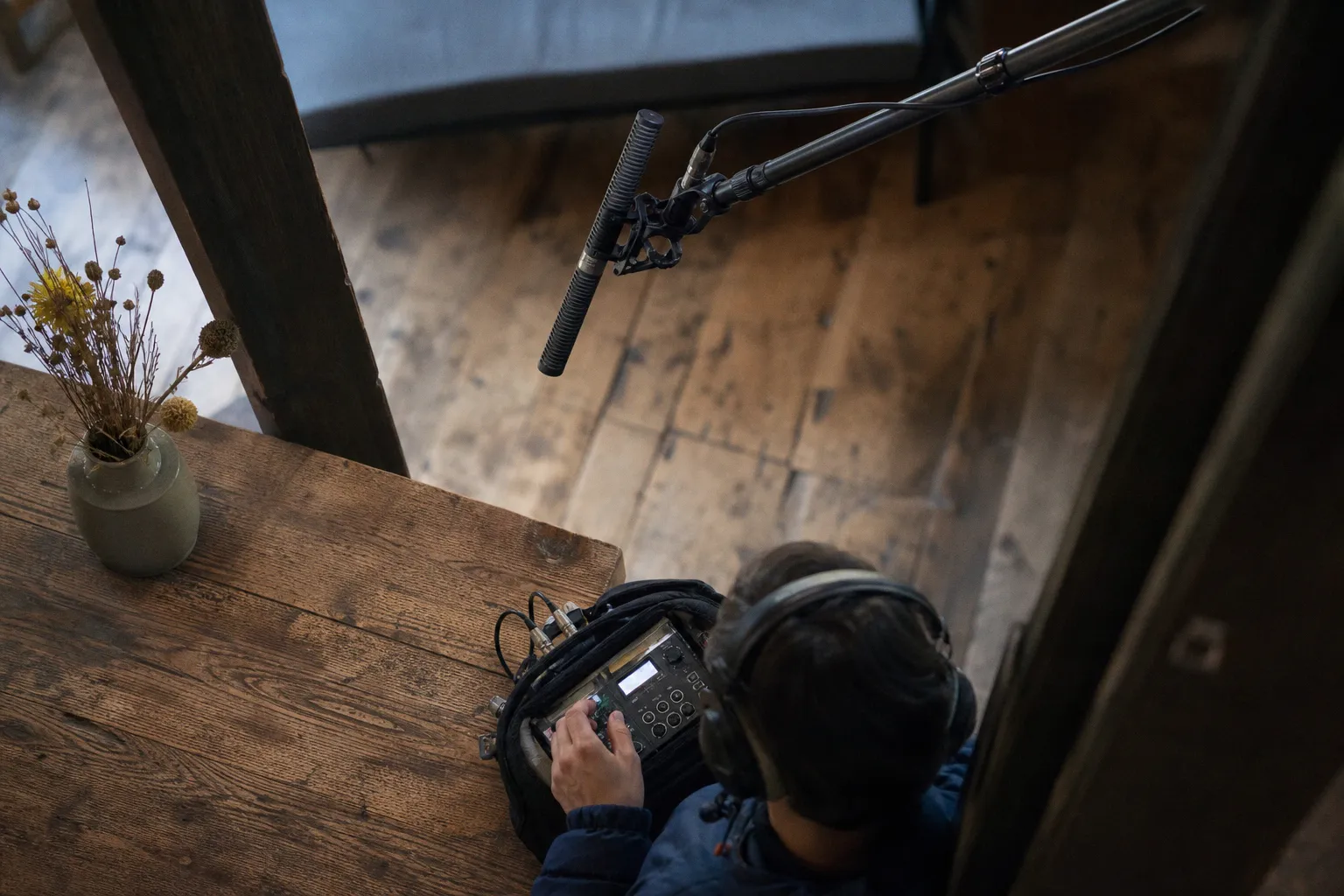
Hook a $1,400 shotgun to a $500 recorder and the audio doesn't just sound cleaner — it measures cleaner. External XLR condensers routinely hit self-noise floors under 15 dB-A.
Built-in mics aren't broken. They're engineered for convenience — stereo XY capture, zero cabling, instant power. Every shortcut has a ceiling. If you've ever pushed a quiet location recording in your DAW and watched the noise floor bloom under the dialogue, you've already met that ceiling. External XLR microphones don't just sound better in review. They hand you more usable signal before you ever open a noise reduction plugin.
The Physics of Noise: Diaphragm Size and Self-Noise Floors
Audio fidelity begins at the capsule, and capsule performance scales with physical mass. Integrated field recorder microphones rely on miniature electret elements — typically 6 to 10 millimeters — sized to disappear into a recorder chassis. External XLR microphones, particularly the shotgun and large-diaphragm condenser categories, house elements from 12 millimeters in compact shotguns up to 25 millimeters in studio condensers, often mounted behind interference tubes that physically sculpt the polar pattern.
The translation lands on a meter. A self-noise floor under 15 dB-A means the microphone itself adds almost nothing to a quiet take. That signal sits cleanly on the timeline. Push a built-in capsule to the same gain and the noise climbs with you, which is exactly why so many production audio tracks need aggressive denoising passes in a DAW before they reach picture.
Self-noise floor isn't a spec-sheet vanity number — it's the distance between dialogue you can hand to the editor and dialogue you'll spend an hour digging out of hiss.
Dynamic range tells the second half of the story. Pro XLR mics handle 130 dB SPL and up before clipping, so a sudden car horn or an actor yelling across the room won't trash the take. Built-in electrets typically max out between 110 and 120 dB SPL — fine for sit-down interviews, dicey for booming crowds or any environment where the action can spike without warning.
So does the gap matter in a noisy café? Honestly, not much — both sources will drown in ambient bed. Does it matter in a quiet interior at 30 dB-A? Every single time.
Signal Integrity and the Case for Balanced XLR
Cables aren't glamorous, but they're the silent failure point of every location audio kit. Built-in capsules feed the recorder through short, unbalanced traces hardwired inside the chassis — fine until you introduce electrical noise. External XLR cables run a balanced signal: two inverted copies of the audio on hot and cold pins, with the input stage rejecting any common-mode interference picked up along the run.
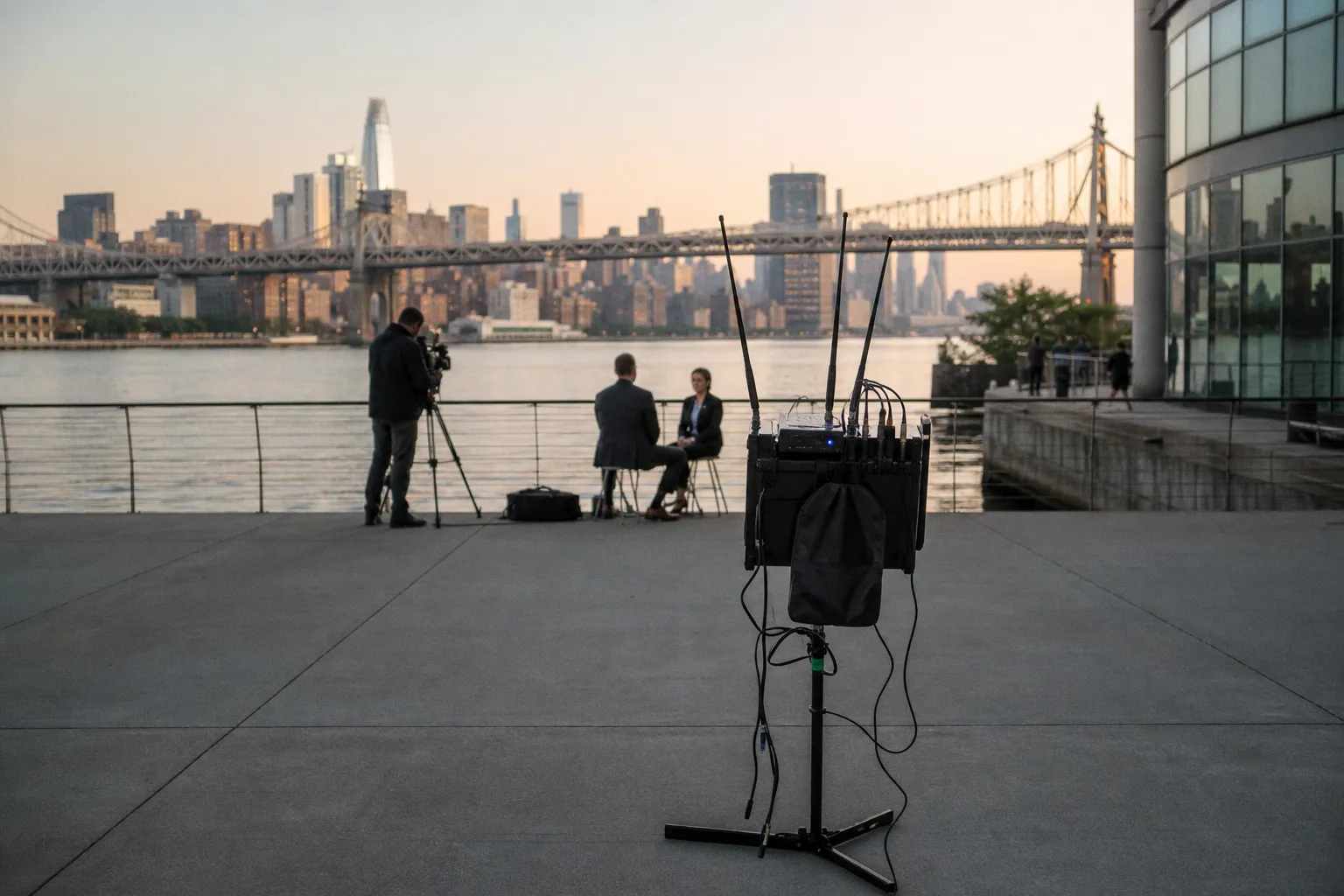
In numbers, that's the difference between a hardwired run of a few centimeters and balanced cable runs that stay clean past 100 meters. Boom from a second-floor window onto a street scene? Run 50 meters of cable without breaking the signal. Plant a lavalier on talent across a soundstage? Same answer. Built-in capsules can't do either — they're physically tethered to their host recorder, period.
So what changes when you can run a hundred meters of cable without signal loss? Everything about how a set gets rigged. Cable operators stop fighting hum. Boom ops stop cramming the recorder against the camera. The location mixer can sit in a truck 80 feet from talent without babysitting gain.
That extra reach also changes the sonic math. With less common-mode interference to fight, balanced XLR feeds quieter preamps, which means your gain staging starts at a lower noise floor in the first place. Stack that on top of the already-lower self-noise of the external capsule and you're compounding advantages the integrated pair structurally can't match.
Directional Control: Interference Tubes vs Fixed Stereo Pairs
Polar pattern is where built-in capsules hit a hard wall. Most portable recorders ship with fixed XY stereo pairs — matched cardioid capsules mounted at 90 degrees, optimized for accurate stereo imaging rather than precise source isolation. Right tool for ambient beds and room tone. Wrong tool for grabbing dialogue in a noisy location.
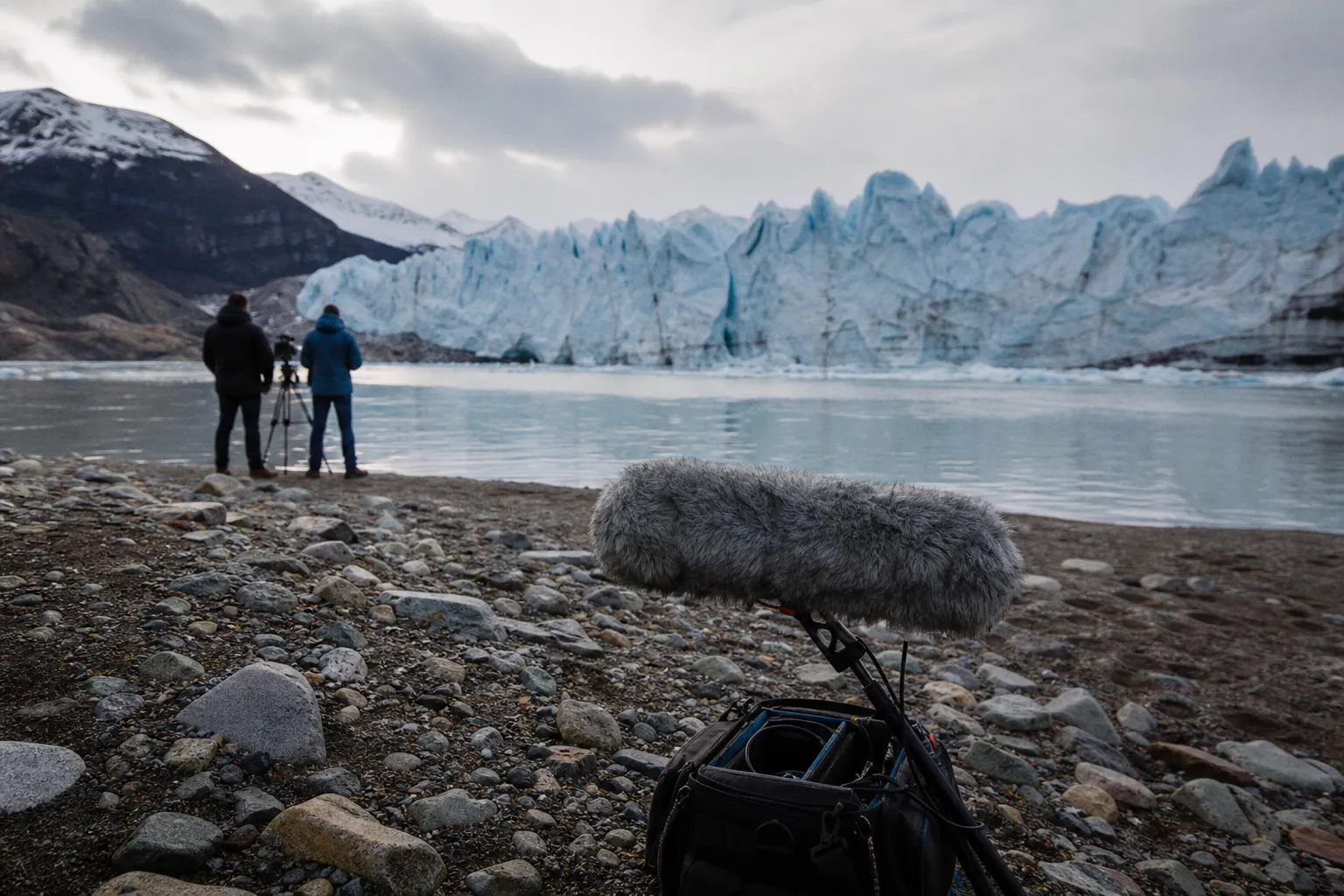
External shotgun microphones use interference tubes — slotted barrels behind the diaphragm that cancel off-axis sound based on arrival time. Result: a supercardioid or lobar pickup pattern that can be aimed at a subject while rejecting sound from the sides and rear. In practice, a shotgun isolates dialogue 6 to 10 feet from the capsule even with the camera off-axis, something no built-in XY pair can match at any distance.
| Parameter | Built-in XY Capsule | External XLR Shotgun |
|---|---|---|
| Typical polar pattern | Cardioid stereo pair | Supercardioid / lobar |
| Off-axis rejection | Moderate | High (12–20 dB+ at 90°) |
| Effective source isolation | Short range | 6–10 ft typical, longer in quiet rooms |
| Stereo imaging | Native XY | Mono (spaced pair needed for stereo) |
| Best production use | Ambience, room tone, scratch | Dialogue, narration, focused capture |
Trade-off is real — shotguns are mono. If you need stereo perspective, you rig two XLR shotguns as a spaced pair or A-B configuration, which doubles your cable count and rig complexity. Built-in XY gives you width for free. The question is what the production actually needs.
Preamplifier Power and the 48V Phantom Standard
XLR condenser microphones don't just send audio down the cable — they need power. The industry standard is 48V phantom power, fed from the recorder's XLR inputs through the cable itself. No battery, no external box, no compromise. Every serious field recorder — Sound Devices 833 and MixPre lines, Zoom F8n, Tascam HS-P82 — ships with switchable 48V on each input, designed to drive demanding condenser loads.
The supporting specs matter just as much. Professional field recorders offer preamp gain ranging from 60 to 75 dB — wide enough to drive low-output ribbon and dynamic mics alongside high-output condensers. Self-noise on those preamps can rival dedicated audio interfaces, especially in the Sound Devices and MixPre families, where EIN (equivalent input noise) drops below -128 dBu. That's the headroom that lets you run a quiet boom at 50 dB of gain without an audible penalty.
Built-in capsules don't need phantom because they aren't classic condensers — they're electrets with an onboard JFET preamp, biased from the recorder's internal power. Simpler, smaller, less capable. The penalty is dynamic range and headroom, and you can't swap capsules when the production needs change. That limitation is structural, not negotiable.
Strategic Use Cases for Integrated Capsules
Calling built-in mics obsolete is the kind of take that ages badly. Pros reach for them all the time, and pro gear designers keep building them in by choice.
Scratch tracks and sync reference: when the camera is moving, the gimbal is rigged, and there's no time to plug in a shotgun, the built-in XY pair delivers perfectly serviceable sync audio the editor can use as a slate backup. The shot isn't lost because someone forgot to plug in a cable.
Ambient beds and room tone: XY stereo pairs image rooms beautifully. For documentary texture, atmosphere, or any sequence where you want the space to feel present, integrated capsules are usually the better choice. No interference patterns to fight. No twenty minutes positioning a spaced pair for a three-second insert.
Backup audio: even on a fully rigged set, experienced recordists keep the built-in mics hot as a safety track. Wireless pack dies, cable shorts, boom op catches an elbow — that stereo pair is still rolling. That's not paranoia, that's professional practice.
Run-and-gun observer coverage: walking b-roll, documentary work, narrative scenes where the camera is the audience's eyes and the audio needs to feel like the space — built-ins win the speed-versus-fidelity trade every single time.
| Built-in Mic Edge | Why It Still Earns Its Slot |
|---|---|
| Zero setup time | Pull recorder from bag, hit record — no rigging |
| Native stereo image | XY pair delivers L/R with no second cable |
| No cable management | Internal wiring can't tangle or fail mid-shoot |
| Always available | No phantom toggle, no battery, no forgotten XLR |
So the frame isn't "built-in bad, XLR good." It's knowing which tool fits the moment. Professional audio isn't a religion. It's a stack of options deployed by need, and pretending one option rules every scene is how rigs get under-used.
The Verdict
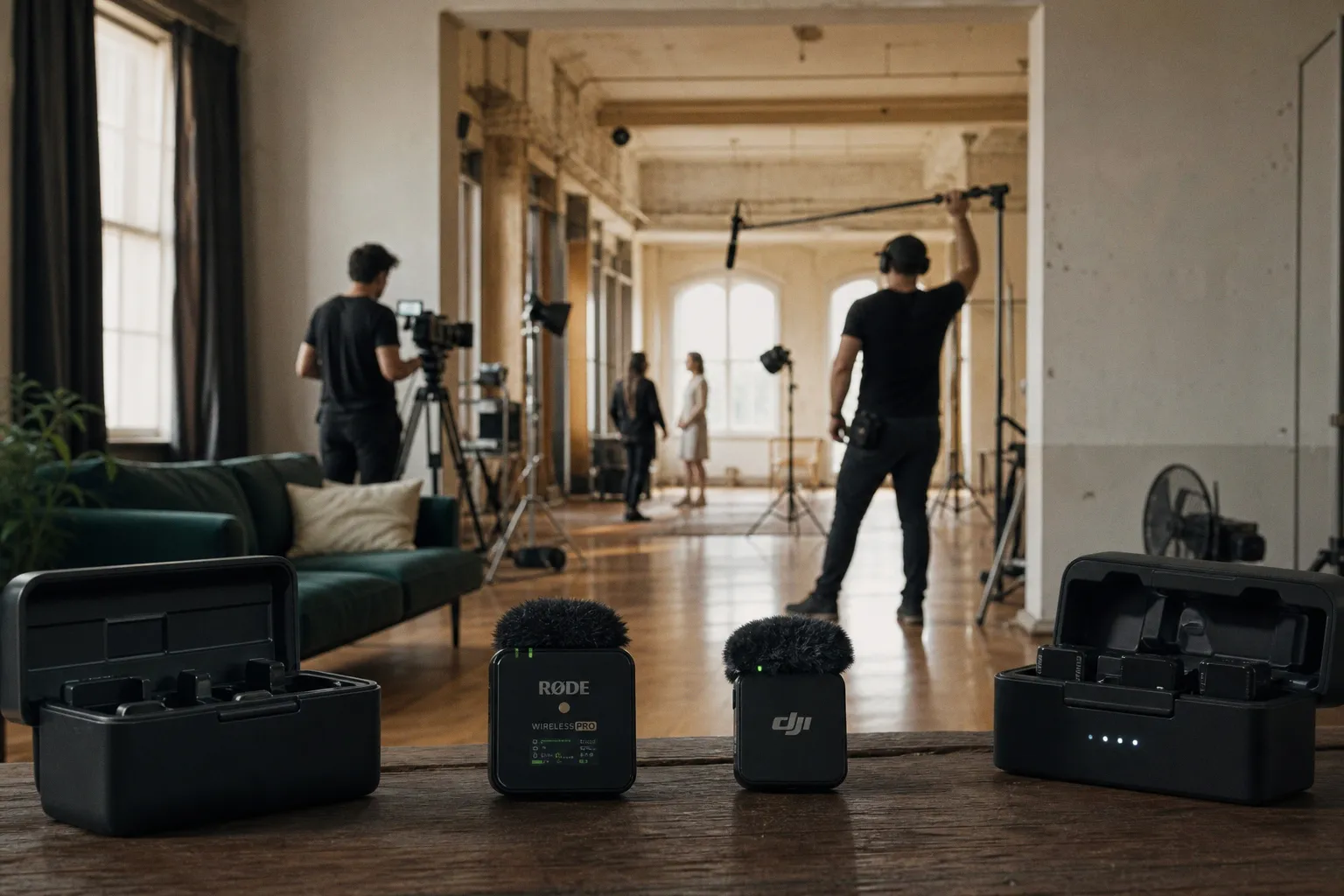
The standard pattern across documentary, narrative, and broadcast work holds for a reason. External XLR microphones deliver lower self-noise, longer cable reach, sharper directionality, and dynamic range that survives unpredictable locations. Built-in capsules still earn their slot for ambient capture, scratch audio, and moments where speed matters more than fidelity. Every working recordist carries both options and decides which to deploy before the clap.
The market is already moving toward hybrid rigs: smaller boom setups, wireless XLR systems, and shotgun arrays that plug straight into recorders built for them. Within two years, expect the line between "built-in" and "external" to blur further as recorders with swappable capsules and onboard 32-bit float recording soak up dynamic range that used to demand external preamps entirely. The quality ceiling keeps rising. So does the floor. The question for any filmmaker right now isn't whether to upgrade — it's which upgrade cuts the loudest hiss out of the next production.