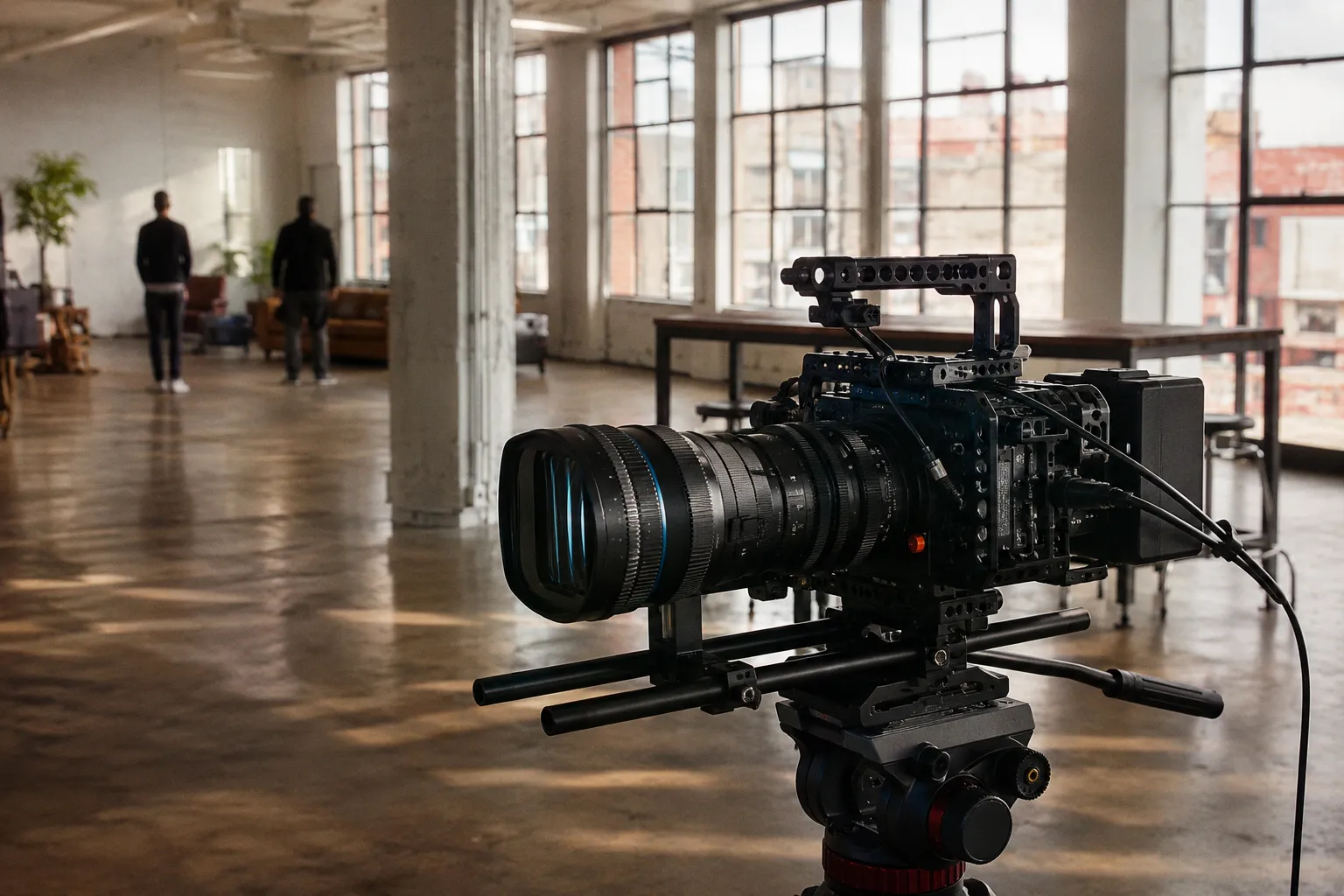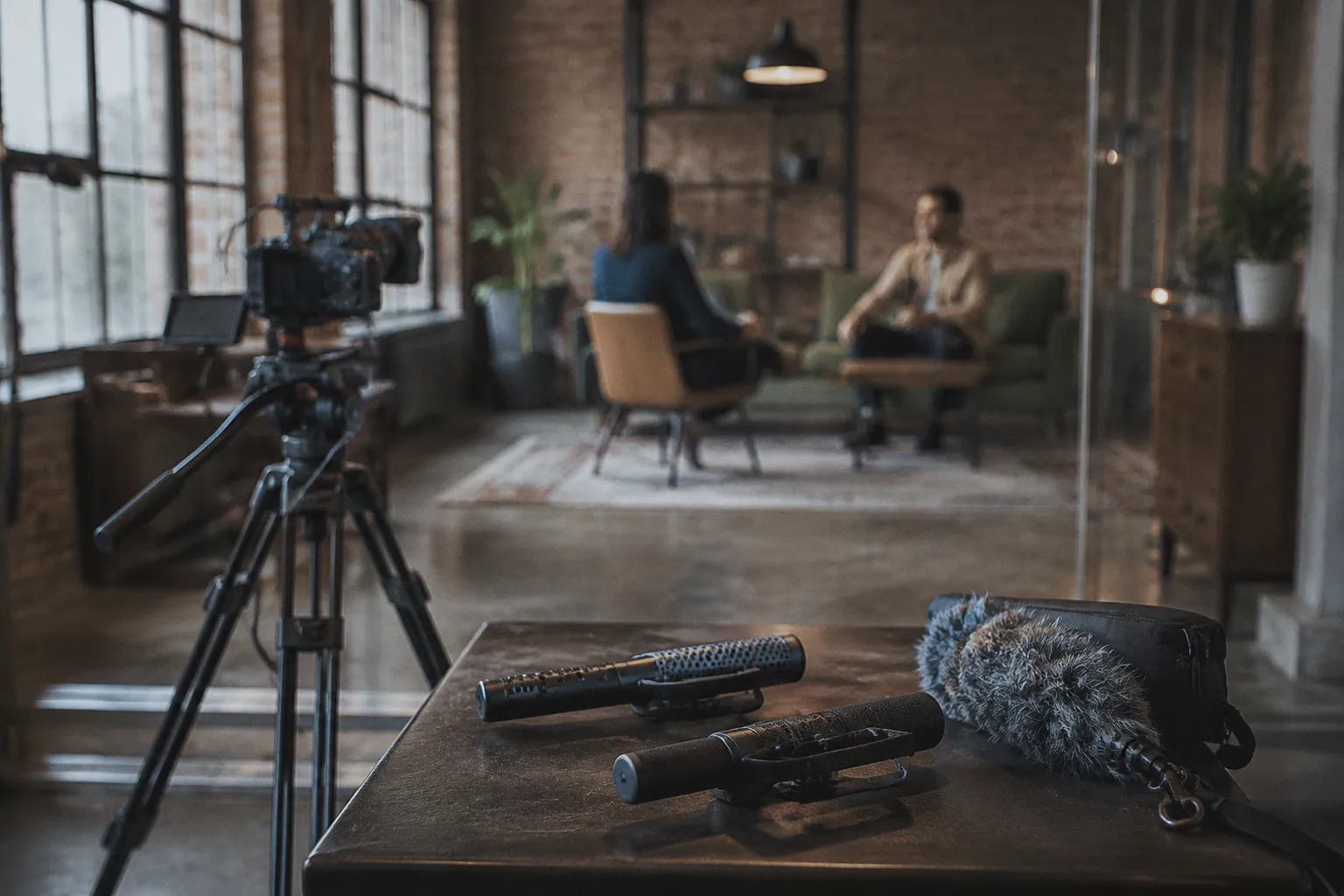
You bought the camera. You bought the lens. You set the frame. Then you pointed whatever shotgun you could afford at your actor, and the dialogue came back muddy, boxy, and buried under ambient hum.
# Shotgun Mic Showdown: Rode NTG5 vs Sennheiser MKE 600 for Indie Dialogue
For indie crews shooting dialogue on a single operator's budget, two shotguns keep surfacing in every gear thread, every rental cart, and every location sound bag: the Rode NTG5 and the Sennheiser MKE 600. They look similar from across a set, they both promise broadcast-grade dialogue capture, and they both sit in the sweet spot where indie budgets can actually stretch. But they solve the same problem in fundamentally different ways, and picking the wrong one for your camera and your workflow means compromising your entire audio chain before a single frame of usable dialogue is in the can.
Let's tear them apart — the acoustic engineering, the power architecture, the physical reality of holding one over your head for a 12-page scene — and figure out which shotgun actually belongs on your rig.
The mic you can power is the mic that captures the scene. Phantom power isn't always optional, but it isn't always available either.
Acoustic Engineering: Circular Ports vs. Traditional Slot Design
Here's where the two microphones diverge at the philosophical level. Every shotgun capsule is a battle against the laws of physics: you want a tight super-cardioid pickup pattern that rejects sound from the sides and rear, but the interference tube that creates that directionality also introduces phase cancellations and a phenomenon called "off-axis coloration" — sound coming from the wrong angle gets colored, sometimes dramatically, because certain frequencies cancel out and others survive.
The Sennheiser MKE 600 uses a traditional interference tube with slots running along its length. This is the established engineering approach — and it works. Sennheiser has been refining this design language for decades, and the MKE 600 produces a focused, predictable super-cardioid pattern with solid rejection for typical dialogue scenarios.
The Rode NTG5 went a different direction. Rode replaced the slotted interference tube with a circular acoustic port design — small, precision-machined holes arranged in a pattern around the capsule housing. Rode's claim is that this geometry produces superior acoustic transparency and a more natural, uncolored off-axis response. In practical terms, that translates to dialogue that sounds less "shotgunned" — less of that telltale nasal, mid-forward coloration you sometimes get when an actor turns their head or ambient sound wraps around the capsule.
The NTG5 also delivers a wider frequency response at 20Hz to 20kHz, which means more low-end information reaches your recorder. For voice, that matters less than it would for, say, a foley session — but for indie productions scoring everything in one room, capturing fuller harmonic content at the source reduces the amount of EQ surgery you have to perform later.
So which sounds "better"? That's the wrong question. The right question is: which acoustic philosophy matches your post-production pipeline? If you're mixing in a treated room with surgical EQ and compression, the MKE 600's focused, slot-tube signature might feel like a more predictable starting point. If you're running dialogue through aggressive noise reduction and want a flatter capture with more low-end body to work with, the NTG5's circular ports give you more raw material.
Power Versatility: Phantom Power Constraints and Battery Independence
Power architecture separates these two microphones more decisively than almost any other spec. And on an indie set, power architecture determines whether you actually capture the take.
The Rode NTG5 requires 48V phantom power. Period. No phantom, no mic. Plug it into a camera, recorder, or interface that can't deliver 48V phantom, and you've just bought an expensive paperweight. This isn't a flaw — phantom-powered condensers are the industry standard for a reason — but it is a hard constraint that shapes your entire rig.
The Sennheiser MKE 600 accepts both 48V phantom power and a single AA battery. Drop in an AA, and the mic runs for approximately 150 hours. That's not a typo. Two weeks of continuous shooting on a single battery.
Why does this matter? Because indie cameras are wildly inconsistent in their phantom power delivery. Some cinema cameras feed phantom reliably. Some mirrorless bodies either don't offer phantom at all, or deliver it through a noisy preamp that contaminates the signal before it ever reaches your recorder. Some field recorders offer phantom, but their battery life plummets when phantom is engaged.
| Parameter | Rode NTG5 | Sennheiser MKE 600 |
|---|---|---|
| Power Source | 48V Phantom Power only | 48V Phantom Power or 1x AA Battery |
| AA Battery Life | N/A | ~150 hours |
| Field Reliability | Depends entirely on phantom source | Can run independently of any phantom source |
The MKE 600's battery flexibility turns it into a universal mount — drop it on a Sony a7S III, a Canon R5, a Zoom F6, or a camera you pulled out of a rental house at midnight. The NTG5, by contrast, demands a powered chain. That's not a dealbreaker if you own a proper field recorder or a cinema body with clean phantom, but it's a chain of dependencies.
Run-and-gun isn't a genre. It's Tuesday.
Weight and Ergonomics for Run-and-Gun Filmmaking
Booming a shotgun for 14 takes of a single monologue is an upper-body workout nobody warned you about in film school. Every gram matters.
The Rode NTG5 weighs 76g. The Sennheiser MKE 600 weighs 128g without a battery. That 52-gram difference might not sound dramatic on paper, but multiply it across a full shooting day, a longer boom pole, and a shock mount that adds its own heft, and you've got a measurable fatigue difference. The NTG5 is one of the lightest professional shotguns you can buy, and Rode engineered it specifically for mounted applications where weight is a structural concern — drone work, gimbal rigs, camera-top shotgun placement where balance matters more than reach.
The MKE 600 is heavier, but that mass comes with a side benefit: it's physically sturdier in hand and more resistant to handling noise transmission if you're running it handheld or on a shorter boom. Heavier microphones sometimes behave better on cheaper shock mounts because their mass damps vibrations more effectively.
If your indie operation involves a lot of camera-mounted shotgun work — vlog-style narrative, BTS content, run-and-gun doc-style capture where you can't always boom — the NTG5's weight advantage is genuinely meaningful. If your operator is dedicated to booming and your priority is a solid handheld feel, the MKE 600's heft is a feature, not a bug.
Onboard Controls and Handling Noise Management
This is where the Sennheiser's design philosophy tilts toward practical field operation. The MKE 600 features a switchable low-cut filter — a high-pass filter that rolls off low-frequency rumble before it hits your recording chain. Wind noise. Handling noise transmitted through the boom. HVAC hum in the location. Traffic rumble bleeding through the walls. The low-cut filter surgically removes the rumble that doesn't belong in dialogue, and it's engaged with a physical switch on the mic body.
The Rode NTG5 has no onboard switches. No low-cut. No pad. No roll-off. Nothing. Rode's reasoning is that the circular port design and the mic's natural frequency response minimize the need for onboard filtering, and that any low-cut or attenuation should happen downstream — at your recorder, your mixer, or in post.
This is a legitimate engineering philosophy, but it puts more responsibility on your downstream chain. If your recorder doesn't have a high-pass filter, or if your mixer is busy with other concerns, you can't fix rumble at the source — you fix it later, often at the cost of intelligibility.
For the indie operator who values streamlined controls at the mic body — flip a switch, solve a problem, move on — the MKE 600 wins on ergonomics. For the operator with a fully featured recorder and a disciplined signal chain who prefers to keep the mic capture as flat as possible, the NTG5's minimalist approach is more aligned.
Matching the Microphone to Your Camera and Preamp Chain
Every mic decision is downstream of a bigger decision: what is the rest of your audio chain? Because a microphone doesn't exist in isolation — it lives or dies based on what feeds it power, what records its signal, and what processes that signal afterward.
If you're running a dedicated field recorder — a Zoom F6, a Sound Devices MixPre, or any recorder with clean, reliable phantom power — both microphones will perform at their best. The NTG5's hard 48V requirement becomes a non-issue. The MKE 600's battery option becomes a backup rather than a necessity. At this level, your decision comes down to acoustic preference and workflow style.
If you're running camera-mounted into a mirrorless or hybrid body, the equation flips. Many mirrorless cameras either lack phantom power entirely, or supply phantom through preamps that add noise to the signal. The MKE 600's AA battery option becomes a genuine lifeline. Drop in a battery, set the camera's audio input to mic level, and you've bypassed the camera's phantom power entirely. The NTG5 simply can't function in this configuration without an external phantom supply or recorder between the mic and the camera.
If you're recording wireless to a separate system — running the shotgun into a wireless transmitter pack rather than directly into a camera — the MKE 600 again benefits from its dual-power design. Wireless transmitters rarely supply phantom, so the AA battery is what makes the Sennheiser viable. The NTG5 demands phantom from somewhere in the chain, period.
The best microphone isn't the one with the best specs. It's the one that survives your worst day on set.
The Real-World Decision
Both microphones are proven workhorses. Neither is objectively superior across every indie shooting scenario — and anyone telling you otherwise is selling something.
Choose the Rode NTG5 if:
- You're working with cinema cameras or dedicated recorders that deliver clean, reliable 48V phantom power.
- Weight is a structural concern — drone work, gimbal rigs, camera-top mounting where every gram affects balance.
- You want the wider 20Hz–20kHz frequency response and the flatter, more transparent capture of the circular port design.
- Your post-production pipeline includes full mix-down with surgical EQ and you prefer a flat capture at the source.
Choose the Sennheiser MKE 600 if:
- Your camera rig doesn't deliver clean phantom — mirrorless bodies, hybrid cameras, or setups where phantom power is unreliable or noisy.
- You need a universal shotgun that works across multiple camera bodies without reconfiguration.
- You value onboard controls — the switchable low-cut filter solves problems at the source before they contaminate your recording.
- You're feeding wireless transmitters or non-standard recording setups where battery operation is essential.
- You need a ~150-hour AA battery backup for location work where power sources are unpredictable.
The NTG5 is the specialist — a precision instrument that rewards a properly powered chain with exceptional transparency. The MKE 600 is the generalist — a flexible, adaptable tool that works in conditions the NTG5 simply cannot. Your shooting style, your camera body, and your willingness to carry a spare AA determine which philosophy fits your indie operation.
Stop buying based on specs alone. Buy based on the rig you actually own, the locations you actually shoot in, and the power sources you can actually rely on. The right shotgun is the one that's capturing clean dialogue when everything else has gone sideways — and that's always a function of fit, not prestige.