360 Degree Camera Market Growth: Strategic Buying Advice
A 12.3% CAGR is the number to watch. Yahoo Finance is carrying a Verified Market Reports item that puts the 360-degree camera market at USD 4.2 billion by 2033.
The headline number is large. The useful question is narrower
The reported forecast points to a growing 360-degree camera category, not a guaranteed improvement in capture quality. That distinction matters.
A 360 camera can mean several things in production terms:
- a dual-lens consumer unit for fast social capture;
- a rugged action-style camera for field work;
- a multi-camera rig for VR or spatial projects;
- a safety or evidence camera where coverage matters more than tonal latitude.
The market number does not separate those use cases in the available material. So buyers should not read USD 4.2 billion as proof that the segment is technically mature across the board.
The practical test remains basic: resolution after stitching, exposure consistency between lenses, edge detail, chromatic aberration at the seam, rolling-shutter behavior, and codec tolerance under motion. If those metrics fail, the market CAGR does not save the shot.
Bike cameras point to a harder use case
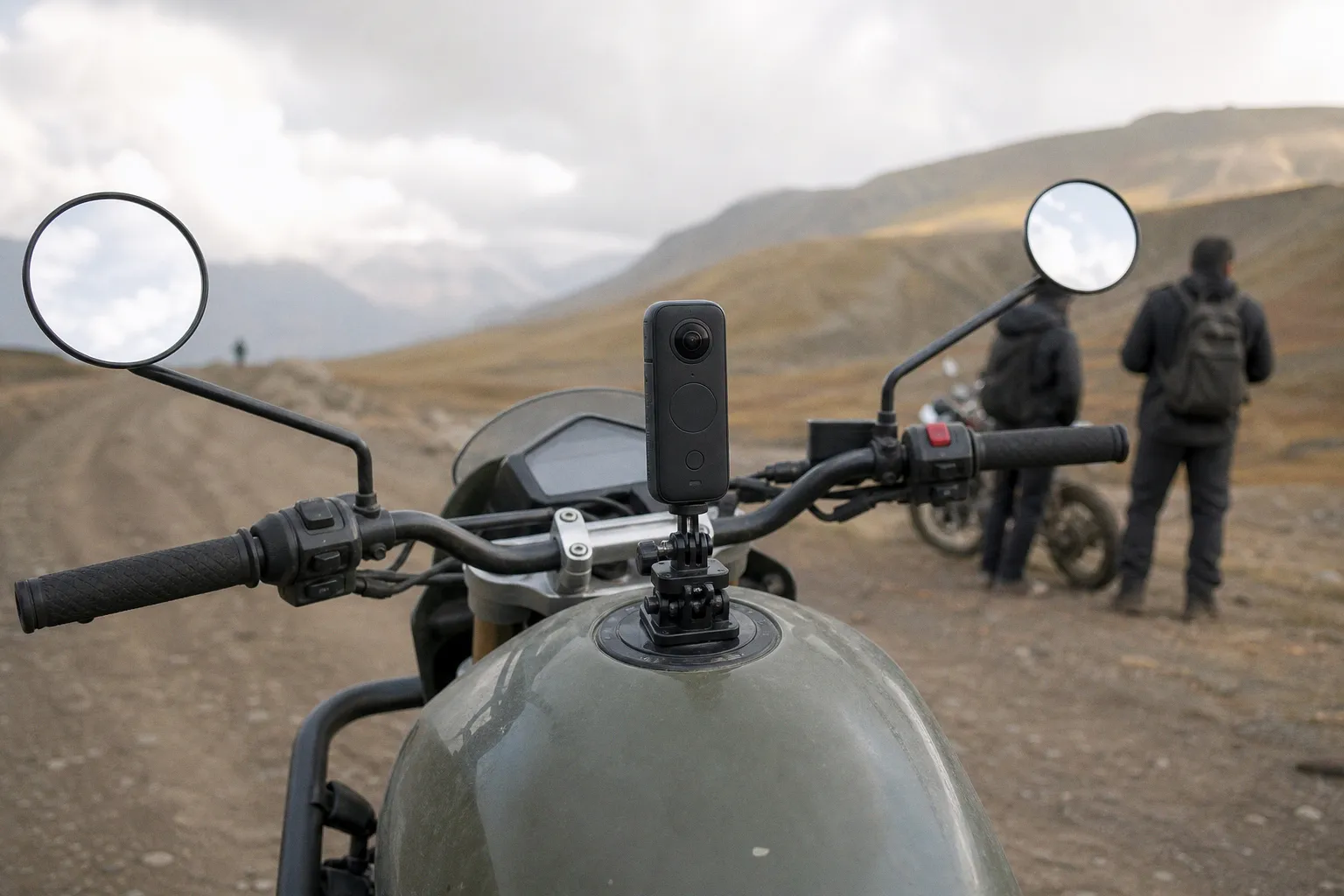
A second source, openPR, reports momentum in the U.S. bike camera market, tied in its headline to safety and legal factors. That is a useful signal for production teams, even outside cycling.
Why? Bike-mounted capture is a stress test. Vibration, fast lighting transitions, wide field coverage, long recording sessions, and evidentiary framing expose weaknesses quickly. A camera used for documentation has different tolerances than one used for polished screen work.
For creators, that creates a split market:
- coverage-first devices, where the frame must record the incident;
- image-first devices, where the file must survive post-production;
- hybrid devices, where manufacturers will likely claim both.
That last category needs the most skepticism. “360” is not a quality metric. It is a field-of-view description. The lab questions are still about bit depth, compression, stabilization artifacts, thermal limits, audio sync, and how cleanly the stitched image holds up after reframing.
What to verify before treating 360 as production gear
The current evidence supports one conservative conclusion: demand is being reported as rising, and adjacent camera categories such as bike cameras are also drawing attention. It does not confirm which manufacturers will win, which sensor formats will dominate, or whether higher market value translates into better files.
Before adding 360 cameras to a production kit, check the following with actual footage, not marketing reels:
- seam behavior near faces, handlebars, rigs, and moving edges;
- exposure matching between lenses under mixed light;
- detail retention after reframing to a flat deliverable;
- codec performance in foliage, traffic, water, and other high-frequency scenes;
- stabilization crop and warping under vibration;
- battery and thermal behavior during long takes;
- metadata and workflow compatibility with the edit pipeline.
For video teams, the forecast is a signal to monitor the category, not a reason to standardize on it blindly. If the camera delivers clean stitched files and survives post without visible penalties, it belongs in the kit. If it only delivers coverage with fragile image data, treat it as documentation hardware. Binary verdict: test before buying.