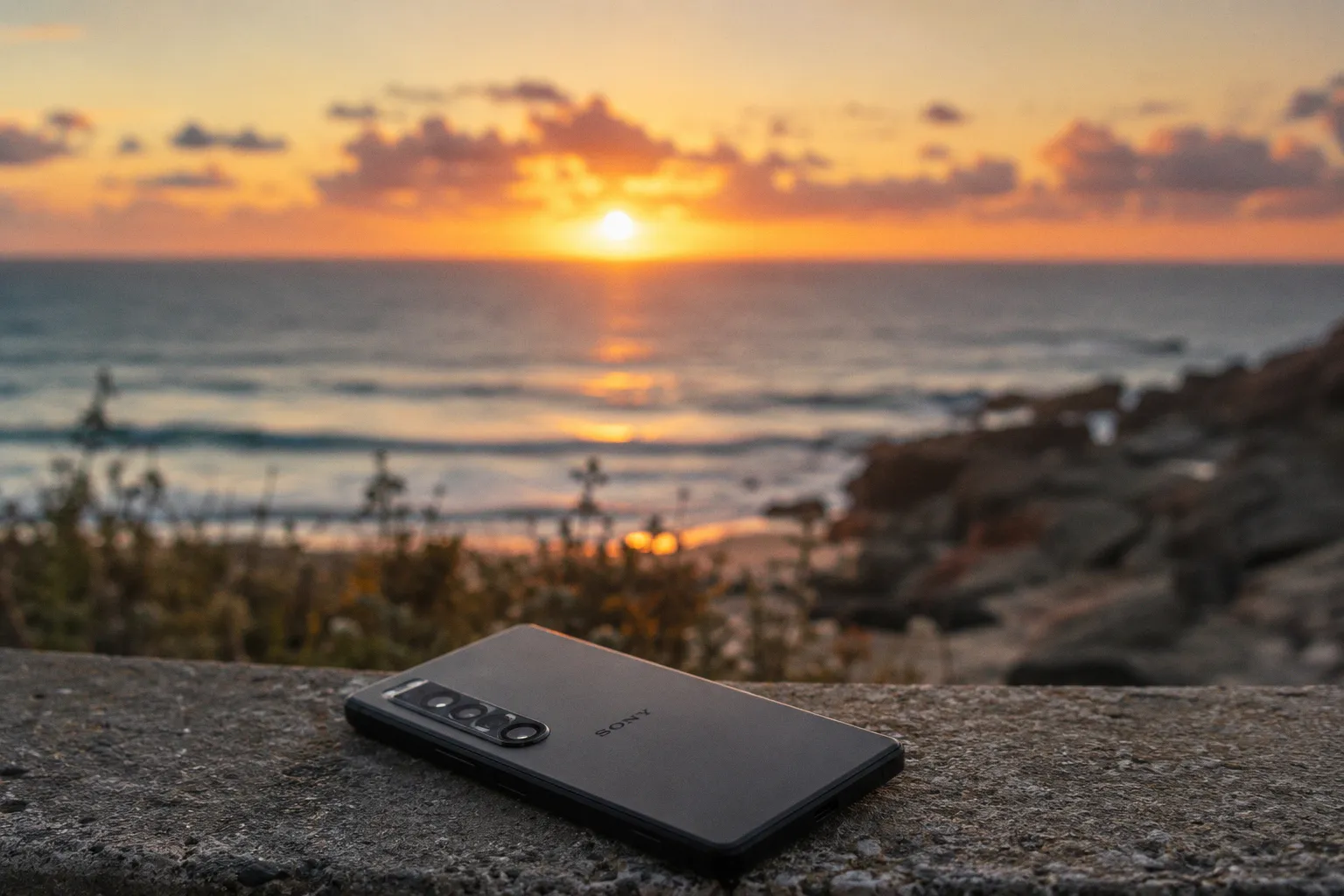
Sony's latest camera sensor could let your next phone take the ultimate sunset photos
Sony has introduced the LYTIA L910, a 50-megapixel mobile imaging sensor measuring 1/1.28 inches, featuring Lateral Overflow Integration Capacitor (LOFIC) technology.
LOFIC Architecture and Dynamic Range Metrics
The primary technical differentiator is the integration of LOFIC technology. In standard CMOS designs, pixels saturate quickly under intense illumination, clipping highlights. The LOFIC design places a capacitor parallel to the photodiode to collect excess charge, preventing early clipping and extending the sensor's full-well capacity.
Key specifications:
* Resolution: 50 megapixels.
* Sensor Format: 1/1.28-inch physical size.
* Dynamic Range: 100 dB in a single exposure. For comparison, the predecessor LYT-828 required multi-exposure bracketing to achieve the same 100 dB threshold.
* Gain Stages: Triple-conversion-gain HDR combined with ultra-high-conversion-gain capabilities.
* Video Output: 4K capture at 60 frames per second with support for real-time HDR previews.
By consolidating the high-dynamic-range capture into a single frame, the sensor reduces the power consumption typically associated with stacking multiple exposures. This single-exposure method also minimizes thermal throttling during extended video recording.
Mitigation of Temporal Artifacts and Noise
Traditional mobile HDR relies on capturing multiple sequential frames at different exposure levels and blending them via software. This process introduces significant technical compromises:
* Ghosting and Motion Artifacts: Fast-moving subjects change position between frames, causing edge distortion and alignment errors.
* Shadow Noise: Boosting underexposed frames to recover shadow detail raises the noise floor, degrading image quality in low IRE regions.
Because the L910 captures highlights and shadows simultaneously, it bypasses these computational steps. The triple-conversion-gain architecture optimizes the signal-to-noise ratio at the hardware level, preserving detail in deep shadows without introducing digital gain artifacts.
Deployment Timeline and Hardware Integration
Mass-produced units of the LYTIA L910 are scheduled to ship by summer 2026. Reports indicate that the upcoming vivo X500 series will integrate this sensor. The technology is not entirely unprecedented; the Motorola Razr Ultra 2026 already employs a LOFIC-enabled main camera, indicating that the manufacturing yields for this capacitor-based architecture are stabilizing.
Concurrently, rumors point to broader sensor updates within Sony's dedicated video lineup. Regulatory registrations in China suggest a successor to the FX3 is scheduled before September 2026. Speculation suggests this camera may feature a stacked sensor design utilizing dual-conversion-gain HDR to achieve high-speed readout and wide dynamic range without a mechanical shutter.
Verdict: The LYTIA L910 is a viable hardware solution to a computational problem, provided the 100 dB single-exposure claim holds under independent lab testing. If verified, it eliminates multi-frame ghosting; if not, it remains a high-cost marketing specification.