Infrared Detector Market: Rising Demand for Thermal Imaging Technologies Forecast 2025 - 2035
Infrared detection is back in the procurement conversation, but the signal is still thin. openPR is flagging an infrared detector market forecast for 2025–2035 around rising demand for thermal imaging technologies.
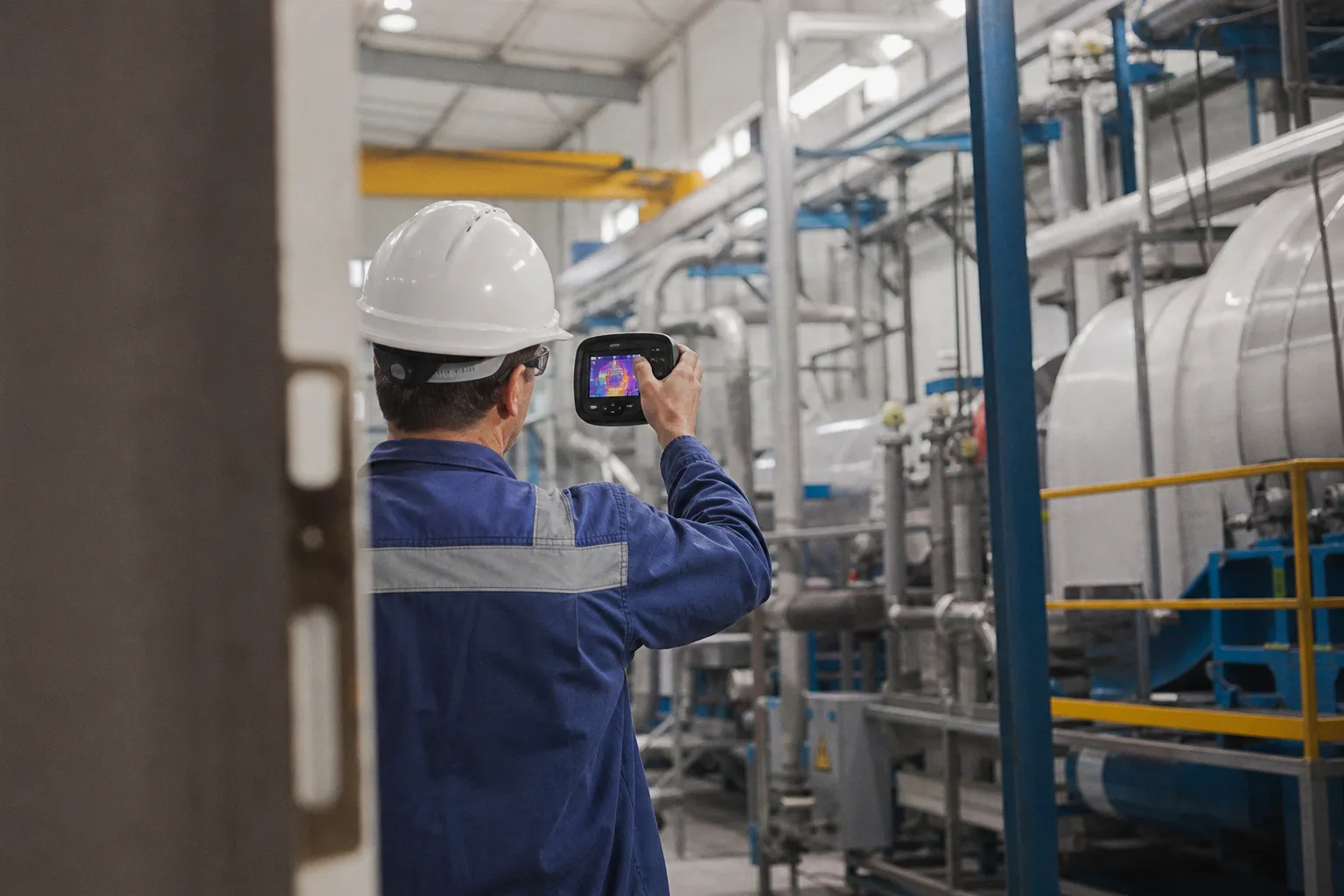
Thermal imaging is moving beyond the specialist corner
The openPR item frames infrared detectors through thermal imaging demand over the 2025–2035 forecast window. No hard market size, CAGR, detector type split, or regional breakdown is available in the provided material, so the claim should stay at headline level: demand is being reported as rising.
That matters because IR capture is not one product class. For production work, the detector is only the first constraint. The real stack is detector, lens transmission, calibration routine, image pipeline, display mapping, and recording workflow. A weak link anywhere in that chain turns a thermal camera into a noisy reference monitor with a false-color LUT.
The practical check is simple: do not buy a “thermal imaging” label. Ask for measurable output. Noise behavior. Calibration interval. Temperature stability. Lens options. Metadata handling. Whether the device can feed a set monitor, recorder, or control room without fragile adapters. If those details are absent, the spec sheet is not production-ready.
Adjacent demand is not the same as cinema demand
The wider imaging cluster is active. AOL reports that a Purdue lab is using imaging technology to look for drought solutions. Quiver Quantitative reports that Wrap Technologies secured exclusive U.S. and NATO distribution rights to AI imaging technology for a counter-drone platform. Ad-hoc-news.de reports Siemens Healthineers is focusing on diagnostics and imaging as global healthcare technology demand grows.
Those are not cinematography stories in the direct sense. They do, however, show why detector supply and imaging R&D may be pulled by sectors with stronger tolerances for price and longer qualification cycles: agriculture research, defense-adjacent systems, and healthcare diagnostics.
For production buyers, that creates a familiar risk. The best detector yields and firmware attention may not first land in cameras designed for sets, stages, or location crews. Industrial and medical buyers often care about repeatability, calibration, and documented performance. Film and media buyers often get marketing language first and test charts later.
So the question is not whether thermal imaging is “hot.” The question is whether vendors serving creators can deliver repeatable metrics: stable readings, manageable latency, predictable false-color mapping, and enough I/O discipline for real crews.
What to test before the next IR purchase
Treat any 2025–2035 thermal forecast as a budget-warning light, not a buying recommendation. The available sources confirm interest across imaging markets, but they do not confirm which detector designs will dominate, which camera makers will benefit, or whether prices will move in either direction.
Before committing to a thermal or infrared-capable system, test it like a capture device, not a novelty sensor:
- Check output consistency across warm-up time. Drift is a workflow problem.
- Verify whether the image pipeline is locked, adjustable, or opaque.
- Test monitoring and recording paths before a shoot day.
- Look for calibration documentation, not just sample footage.
- Separate AI imaging claims from detector performance. They are not the same layer.
Verdict: the market signal is credible enough to watch, but not detailed enough to act on blindly. For cinematography and production engineering, infrared detectors remain a specification problem first and a creative tool second.