SIGGRAPH 2026 Experience Hall Invites Attendees to Step Inside the Future of Interaction and Storytelling
SIGGRAPH 2026 is turning its Experience Hall back into a hands-on lab for immersive creation, with AI agents, motion capture, and real-time virtual production tools on the floor.
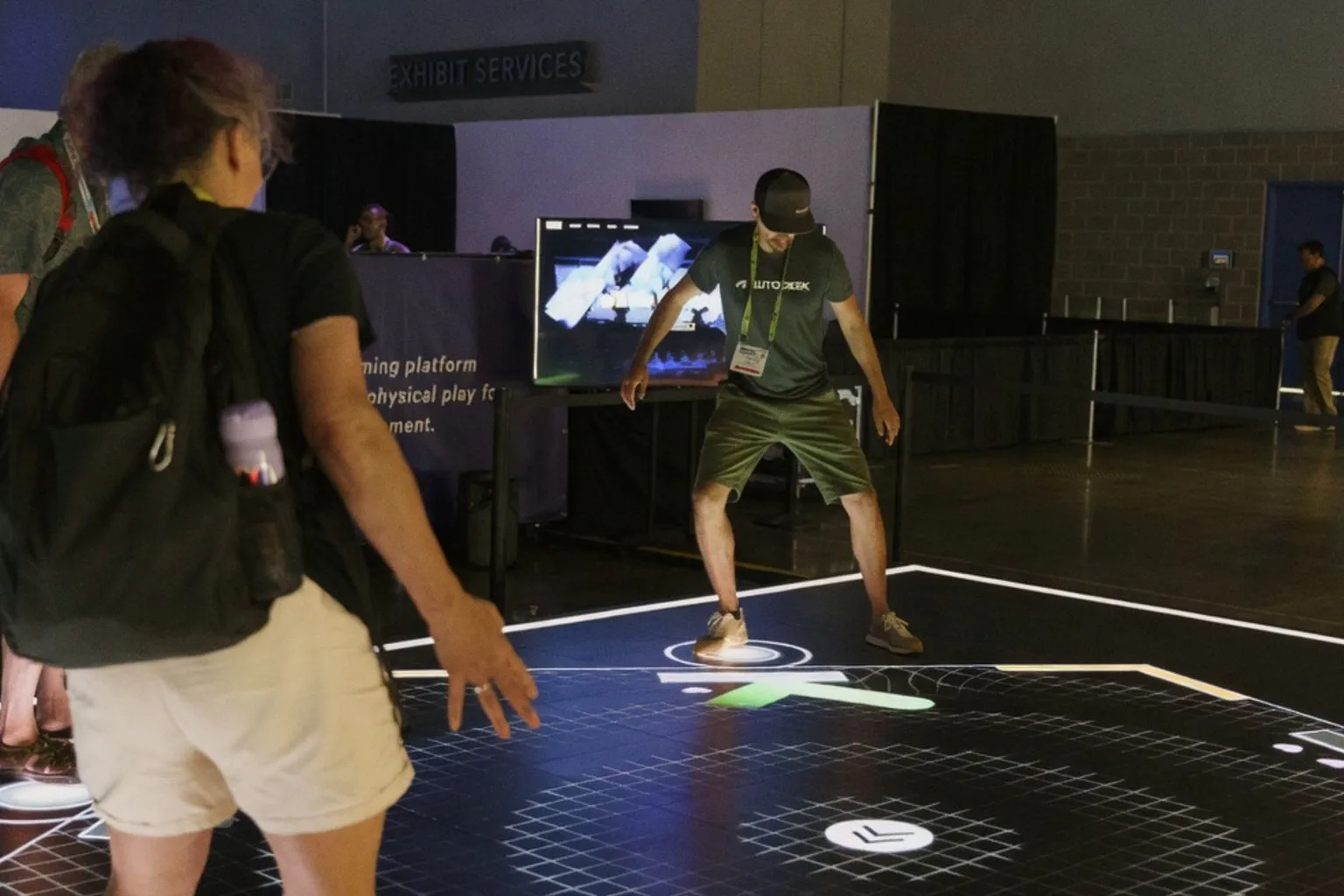
Spatial storytelling gets treated like production, not spectacle
The Experience Hall is framed around five programs: Spatial Storytelling, the Immersive Pavilion, the Art Gallery, Emerging Technologies, and the in-person Hands-On Courses track of the Courses program. That matters because the show is not just stacking demos of shiny hardware. The stated emphasis is hands-on discovery with tools and techniques shaping the next wave of interactive work.
The Spatial Storytelling program, now in its second year at SIGGRAPH, is especially relevant for anyone building experiences beyond a fixed frame. Its chair, Esen K. Tütüncü, describes spatial storytelling as using space itself as the medium: not a page, not a screen, but an environment the audience can navigate, participate in, and inhabit.
That is the production shift to watch. Traditional screen language asks: where do we put the camera? Spatial work asks: where does the viewer stand, what can they affect, and why does that agency belong in the story at all?
The curation, according to the announcement, prioritizes the reasoning behind the technology rather than spectacle alone. Good. That is the filter studios need right now. If a volumetric setup, AI character, or XR installation does not change the audience’s relationship to the scene, it is probably just an expensive wrapper.
Robot dogs, wildfire memory, and low-fi VR development
The projects named for the hall give a useful snapshot of where the creative edge is pointing.
“Dog Walk: Narrating Human-AI Alignment through Companion Robots” follows the co-parenting of two robot dogs whose onboard language models evolve through everyday life. That is a very different use of AI than a chatbot bolted onto a kiosk. It puts synthetic companionship, embodiment, and human-machine relationships into a staged experience.
“Flashover: Spatial Storytelling of Wildfire from Memory to Spatial Experience” uses multi-zone installation design and point-based volumetric imagery to turn wildfire memory into an embodied encounter. For production teams, that phrase — point-based volumetric imagery — is worth flagging. It signals the continued push from flat documentation toward navigable memory spaces, where image data becomes a place rather than a plate.
“Ancestral Craft and Emerging Technologies: Designing Futures from Place” draws on XR installations and robotic artworks developed in the Amazon rainforest, grounding future-facing media in local knowledge. And “Cheap and Cheerful: Low-Fidelity Prototyping for Spatial Stories” traces how no-code, low-fidelity methods helped shape a VR narrative horror project from first idea to funding.
That last one may be the most useful cue for smaller teams. You do not need to begin with the heaviest real-time rendering stack. Prototype the spatial logic first. Test the audience path. Validate the interaction. Then decide where the high-end render pipeline, motion capture, or API integration actually earns its keep. If live systems, agents, or connected environments become part of the build, the same discipline applies to the backend: know what data the experience depends on, whether that is internal telemetry or external data feeds and Web3 developer infrastructure.
Immersive capture is already selling real products
This SIGGRAPH news lands alongside another signal from the production world: Cirrus has created immersive flight demos for its SR22T aircraft using Blackmagic URSA Cine Immersive cameras and DaVinci Resolve Studio. The content is being used by the Cirrus Global Sales Team in the “Let’s Go Fly!” app for Apple Vision Pro.
That is not a gallery experiment. It is immersive media deployed as a sales tool.
The production, reported by ProVideo Coalition, involved Cirrus, Rogue Labs, and XBrand, with aerial cinematography around Page and Sedona in Arizona, including Horseshoe Bend, Lake Powell, and the Grand Canyon. The team used URSA Cine Immersive cameras on the runway, in the cockpit, and on aerial gimbals mounted to the nose and rear of a twin-prop aircraft for air-to-air footage. Cirrus’ media director Anthony Bottini pointed to horizon stability, cockpit spatial layout, and perceived immersion as key challenges when portraying altitude, motion, and the feeling of piloting the aircraft.
That is the practical bridge to SIGGRAPH: spatial storytelling is not only about fantasy environments. It is also about trust, scale, motion, and first-person presence. For studios, the next move is clear: audit your pipeline for one project that would genuinely improve if the audience could inhabit it. Then prototype fast, test the agency, and only then bring in the real-time, volumetric, or immersive capture muscle.