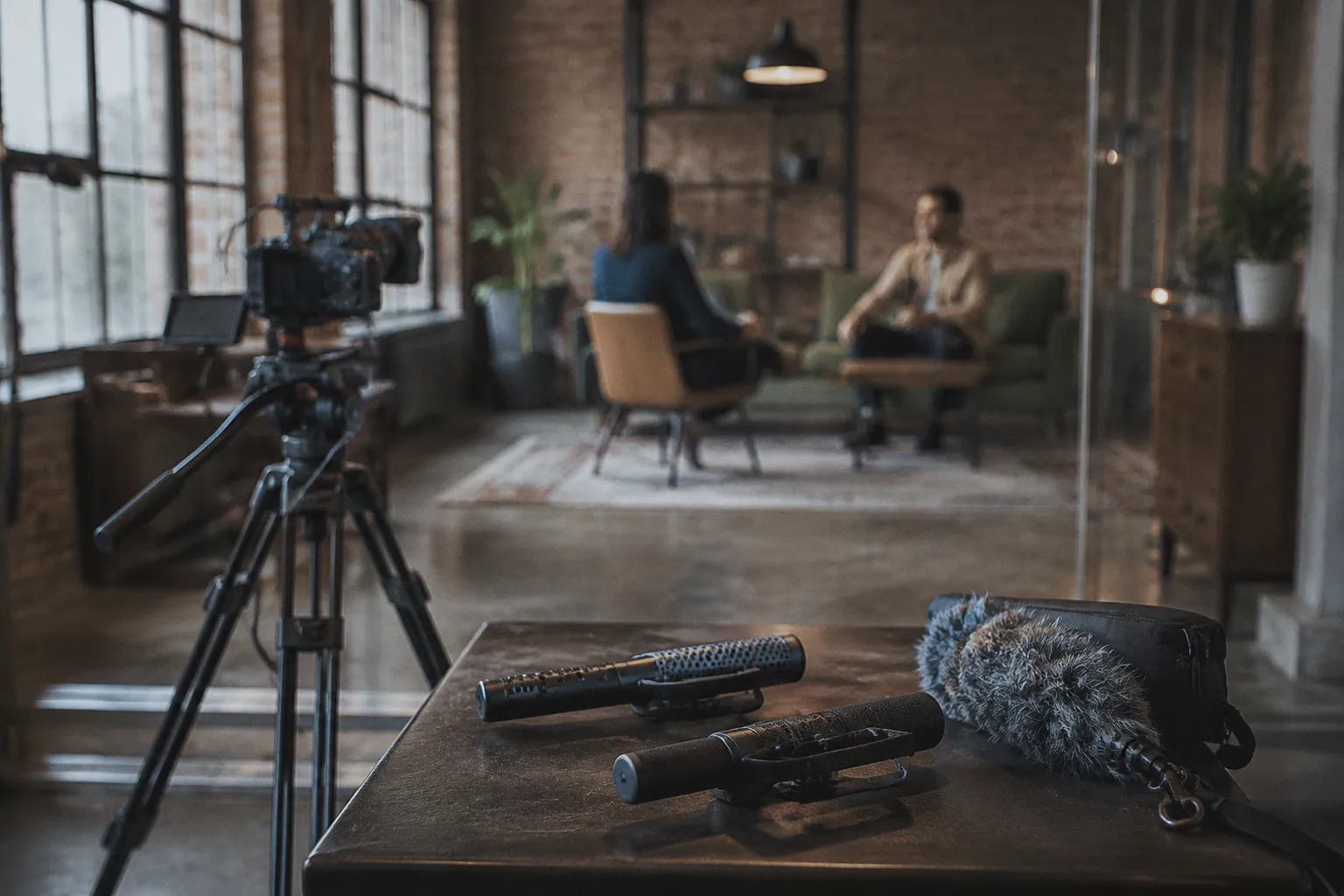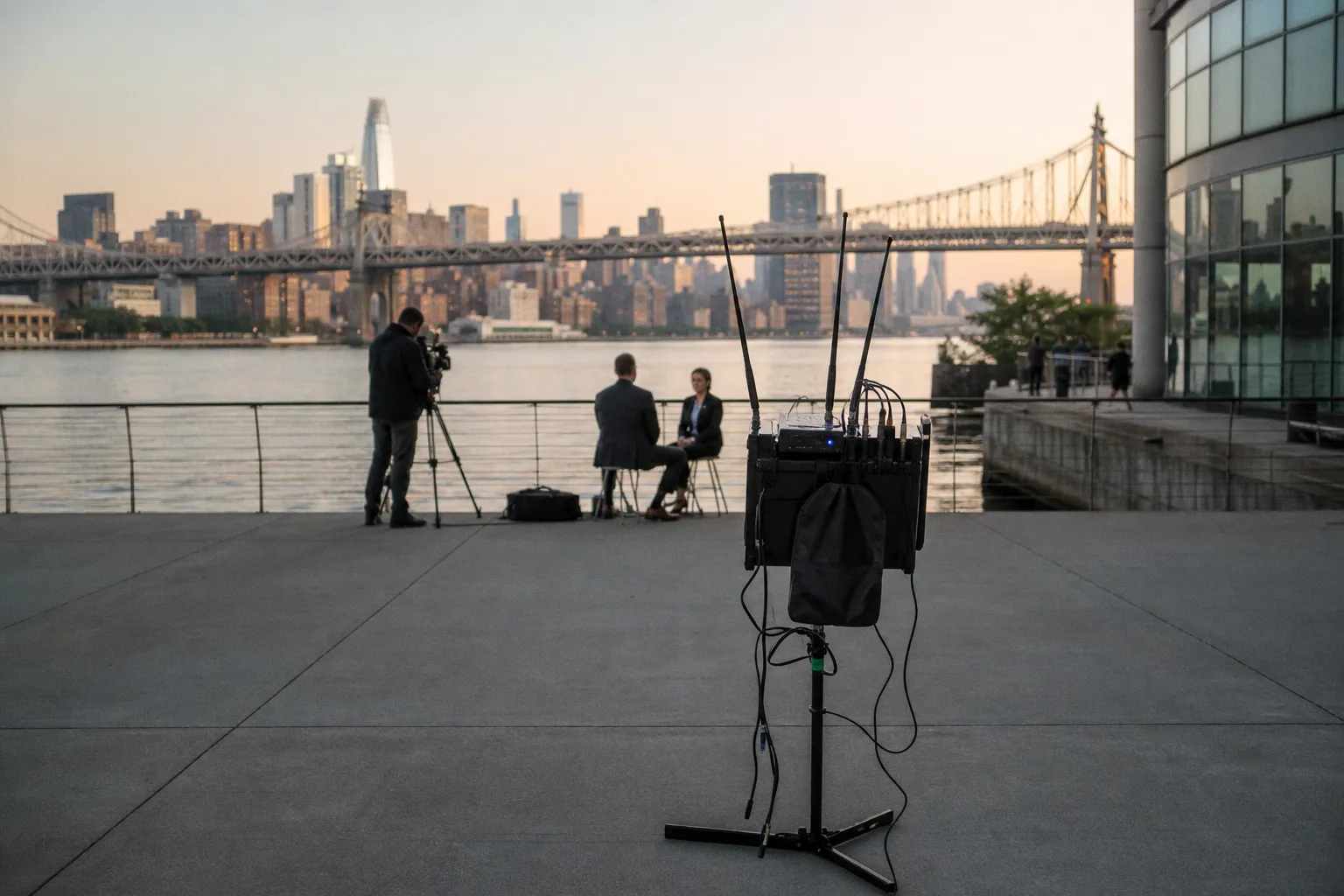
You hear it in the headphones—a thick, rumbling, almost subsonic wash that obliterates every consonant and turns a clean vocal line into a muddy, unintelligible mess.
That 10mph Gust Isn't Just Wind—It's a Low-Frequency Tsunami Destroying Your Dialogue
The frustration compounds when you realize what's at stake. Every outdoor scene carries the emotional weight of its environment—the vulnerability of a whispered confession on a rooftop, the tension of a confrontation in an empty parking lot. These moments demand clarity because the performance lives in the nuance: the slight catch in a voice, the breath before a revelation, the sibilance that signals sincerity rather than deception. Wind turbulence doesn't just mask these details; it replaces them with a low-frequency roar that collapses the dynamic range of your entire recording, leaving you with a track that sounds like it was captured inside a washing machine.
The Physics of Dead Air and Why Foam Fails
The core principle of a professional blimp—or zeppelin, as it's often called—isn't filtration; it's aerodynamic displacement. It doesn't "block" wind so much as create a protected pocket of stable air around the microphone capsule. This is the "dead air" space. A foam windscreen operates on the principle of diffusion and absorption at the surface, which is effective for light turbulence and high-frequency rustling. But wind is a pressure wave with mass and velocity. When it strikes a foam cover, it creates turbulent, low-frequency eddies right at the microphone's entry point. The acoustic energy of your actor's voice has to fight through this chaotic, swirling mass to reach the diaphragm.
A blimp's perforated plastic mesh basket, on the other hand, stops the wind's bulk velocity before it reaches the mic. The kinetic energy of the air is broken up and slowed by the basket's surface, allowing only calm, stationary air—the "dead air"—to exist in the volume between the basket and the microphone itself. Your actor's voice, a collection of pressure waves moving at the speed of sound (about 343 meters per second, not 10 miles per hour), passes through this calm pocket virtually unimpeded. This is why a professional system can achieve a staggering 25 to 50 decibels of wind noise reduction, compared to the meager 5-10dB offered by even a good foam cover. It's not an incremental improvement; it's a fundamental change in the physics of the capture.
Consider what that difference means in practice. Ten decibels represents a perceived doubling of loudness. A 40dB improvement isn't four times better—it's a transformation so dramatic that it changes what you can capture and when you can capture it. Suddenly, that hilltop location you wrote off as "too windy" becomes viable. That dawn shoot with the coastal breeze isn't a disaster waiting to happen; it's Tuesday.
Your foam windscreen is a filter. A professional blimp is a weather system—a controlled microclimate that lets sound through and keeps chaos out.
Anatomy of a Three-Layer Defense System
Thinking of a blimp as just a "basket" is a mistake. It's a meticulously engineered, three-part system where each layer handles a different aspect of the problem.
1. The Inner Sanctum: The Lyre Suspension. This is the system's mechanical isolator. Forget the traditional rubber bands or elastic hoops—they stretch, sag, and transmit vibrations. Modern pro systems use thermoplastic elastomer (TPE) designs, most famously the Lyre suspension. These clips flex in multiple axes, decoupling the microphone from any handling noise transmitted up the boom pole or from vibrations in the basket itself. They provide a critical buffer against structural vibrations—the rustle from a boom op's grip or the low-end thud of footsteps on a wooden deck.
2. The Core: The Mesh Basket. This is the "dead air" chamber itself, typically constructed from a rigid yet lightweight thermoplastic like Hytrel. Its diameter and internal volume are calculated to provide the optimal calm-air pocket for the microphone's length. A standard professional blimp accommodates microphones up to 325mm (12.75 inches) in length with diameters between 19mm and 22mm. The basket's perforations are sized to allow sound waves to pass while breaking up wind velocity. The engineering is deceptively simple: create enough internal volume that pressure equalization happens before turbulence reaches the capsule, but don't make the assembly so large that it becomes unwieldy on a boom.
3. The Outer Shell: The Synthetic Fur Cover. Often derisively called the "deadcat," this is the final, critical defense. The long-pile synthetic fur is designed with a specific open backing. This is crucial. A solid backing would create a high-frequency muffling effect. Instead, the fur's fibers create a massive, tortuous path that diffuses and dissipates wind energy through friction, converting its kinetic energy into negligible heat. This layer is what handles the final, violent gusts, providing that extra 15-20dB of protection that gets you to the 50dB total.
Each layer addresses a specific frequency range and energy type. The Lyre handles mechanical vibrations below 20Hz. The basket tackles the bulk wind pressure from 20Hz up through the midrange. The fur addresses the high-velocity surface turbulence that rides on top of the main wind event. Remove any one layer, and the system's effectiveness drops precipitously—not linearly, but in a cascading failure that leaves the most damaging frequencies unchecked.
Mitigating Low-Frequency Turbulence Below 200Hz
This is where amateurs and professionals part ways. Most "wind problems" are not a broad-spectrum issue. They are a low-frequency energy event, concentrated below 200Hz, often peaking between 50Hz and 100Hz. This is the resonant frequency range of many turbulence vortices. This rumble doesn't just mask dialogue; it saturates your preamps, causing severe low-frequency clipping that is nearly impossible to remove cleanly in post-production without destroying the vocal track.
A blimp's primary mission is to eliminate this sub-200Hz turbulence. The dead air space prevents the pressure waves from forming at the capsule. This is why you can often get away with a blimp even in moderate breezes, whereas a foam cover fails. The fur cover adds another layer of defense against the higher-velocity, slightly higher-frequency gusts that might penetrate the basket. But without the basket's core function of creating dead air, the fur is almost useless against the bass-heavy roar.
Here's the acoustic truth many try to ignore: no amount of post-processing noise reduction can reliably reconstruct dialogue buried under wind rumble. The spectral overlap is too great. Wind turbulence and human vocal fundamental frequencies occupy the same low-midrange territory. When you apply a high-pass filter to remove wind, you're simultaneously gutting the chest resonance and emotional weight of the performance. When you use spectral noise reduction algorithms, they introduce artifacts—warbling, phasing, that metallic "underwater" quality—that are often more distracting than the original noise.
The math is brutal. A male speaking voice has fundamental frequencies typically between 85Hz and 180Hz. Wind turbulence energy peaks between 50Hz and 150Hz. There's almost no frequency band where one exists and the other doesn't. You have to capture it clean. There is no software that fixes this. There is only prevention.
Mechanical Isolation and the Evolution of Lyre Suspensions
Handling noise is the silent killer of otherwise perfect takes. The squeak of a finger adjusting a boom, the creak of a carbon-fiber pole, the subtle shift of the operator's weight—all of these are low-frequency vibrations that travel directly through a rigid mount to the microphone capsule. The Lyre suspension system, pioneered by Rycote in 2014 and now an industry standard, revolutionized this isolation.
Unlike elastic bands that lose tension and resonate at their own frequency, a Lyre mount is a single, continuous piece of thermoplastic engineered to have a low resonant frequency and high damping. It acts as a mechanical low-pass filter, allowing the desired audio frequencies (above, say, 20Hz) to pass while attenuating the vibrations from handling and boom movement (often below 15Hz). It's the difference between hanging your mic on a spring versus floating it in a viscous fluid. The result is a dramatically cleaner boom track, free from the woody thuds and metallic creaks that plague cheaper mounts.
The evolution didn't happen overnight. Early suspension systems relied on rubber o-rings and elastic cord—materials that degraded with UV exposure, temperature cycling, and simple aging. A six-month-old elastic mount could lose 40% of its isolation capability, and you'd never know until you heard the rumble in playback. The Lyre's thermoplastic construction resists environmental degradation. It maintains its mechanical properties across a temperature range from arctic cold to desert heat. For the recordist in the field, this means less time fixing "boom rustle" in post and more time capturing performance.
Technical Constraints: Diameter Compatibility and Boom Weight Management
A blimp is not a universal tool. Compatibility is non-negotiable. Slide a microphone with too large a diameter into a blimp, and you risk the capsule brushing the inner mesh, creating new noise. Too small, and it may not seat properly in the Lyre suspension, compromising isolation. Always check your microphone's diameter (typically 19-22mm for shotgun mics) and length against the blimp's specifications. The tolerances are tight—sometimes as narrow as 2mm—and there's no "close enough" in acoustic engineering.
| Consideration | Foam Windscreen | Professional Blimp System |
|---|---|---|
| Wind noise reduction | 5-10 dB | 25-50 dB |
| Effective frequency range | High-frequency only | Full spectrum, emphasis below 200Hz |
| Mechanical isolation | None | Lyre suspension (TPE) |
| Weight addition | 20-50 grams | 550+ grams |
| Setup time | Seconds | 2-3 minutes |
| Post-production rescue potential | Limited | Unnecessary when used correctly |
Then there's the weight. A professional blimp system, fur included, can add 550 grams or more to the end of your boom pole. This isn't trivial. It changes the balance point, increases operator fatigue, and can make precise boom placement more challenging over a long shooting day. It's a physical trade-off for acoustic purity. The solution isn't to avoid the blimp; it's to counterbalance your pole properly, strengthen your boom technique, and use the lightest, stiffest pole your budget allows. Carbon fiber poles with internal cabling help, but the real investment is in the operator's endurance and technique.
Some mixers opt for a pistol grip with a short extension for dialogue scenes where the boom only needs to cover a few feet. This reduces the lever arm effect and operator fatigue while still providing full blimp protection. It's a compromise, but a smart one—better to have a slightly less optimal boom angle with clean audio than a perfect angle drowning in wind noise.
The blimp is the acoustic equivalent of a camera's matte box—it's not optional for serious work; it's the defining barrier between a controlled image and visual noise.
Preserving Acoustic Transparency and High-Frequency Detail
The final, pedantic concern: does this entire apparatus muffle the sound? A well-designed system is acoustically transparent. The mesh basket is tuned not to resonate. The fur cover's open-back design ensures that the high-frequency information—the consonant crispness of a 't' or 's', the breathy detail of an intimate scene—is not absorbed. The goal is to stop the wind while passing the voice with no coloration.
This requires the fur to be in good condition. Matted, wet, or dirty fur loses its open structure and can indeed start to attenuate high frequencies. It's a consumable, not a lifetime purchase. Inspect it, clean it per manufacturer guidelines, and replace it when it loses its loft. The system's transparency is only as good as its outermost layer's condition.
There's also the matter of positioning. A blimp doesn't care where the sound comes from—it attenuates wind from any direction equally. But your microphone's polar pattern still applies inside the basket. Point the interference tube toward the talent, and the off-axis rejection characteristics remain intact. The blimp doesn't change the mic's pattern; it changes the environment the mic operates in. This distinction matters because it means you can still use proximity effect, still leverage the mic's natural presence rise, still make artistic choices about tone and texture. The blimp is a shield, not a filter.
So, the next time you're on location and that forecasted light breeze kicks up, don't reach for the foam and hope for the best in post. You're gambling with the most fundamental element of your story: the human voice. Switching to a professional blimp isn't an upgrade in gear; it's an upgrade in philosophy. It's the decision that the sonic integrity of your work is worth the weight, the cost, and the meticulous setup. It's understanding that sound isn't a secondary visual element—it's the primary emotional conduit of your narrative, and protecting it from the elements is your first and most critical duty.