Mule Carts Falabella: A Compact Workstation for Mobile Production Teams
According to Newsshooter, Mule Carts has launched the Falabella: a compact production cart that folds down for car transport, then opens into a configurable on-set workstation.
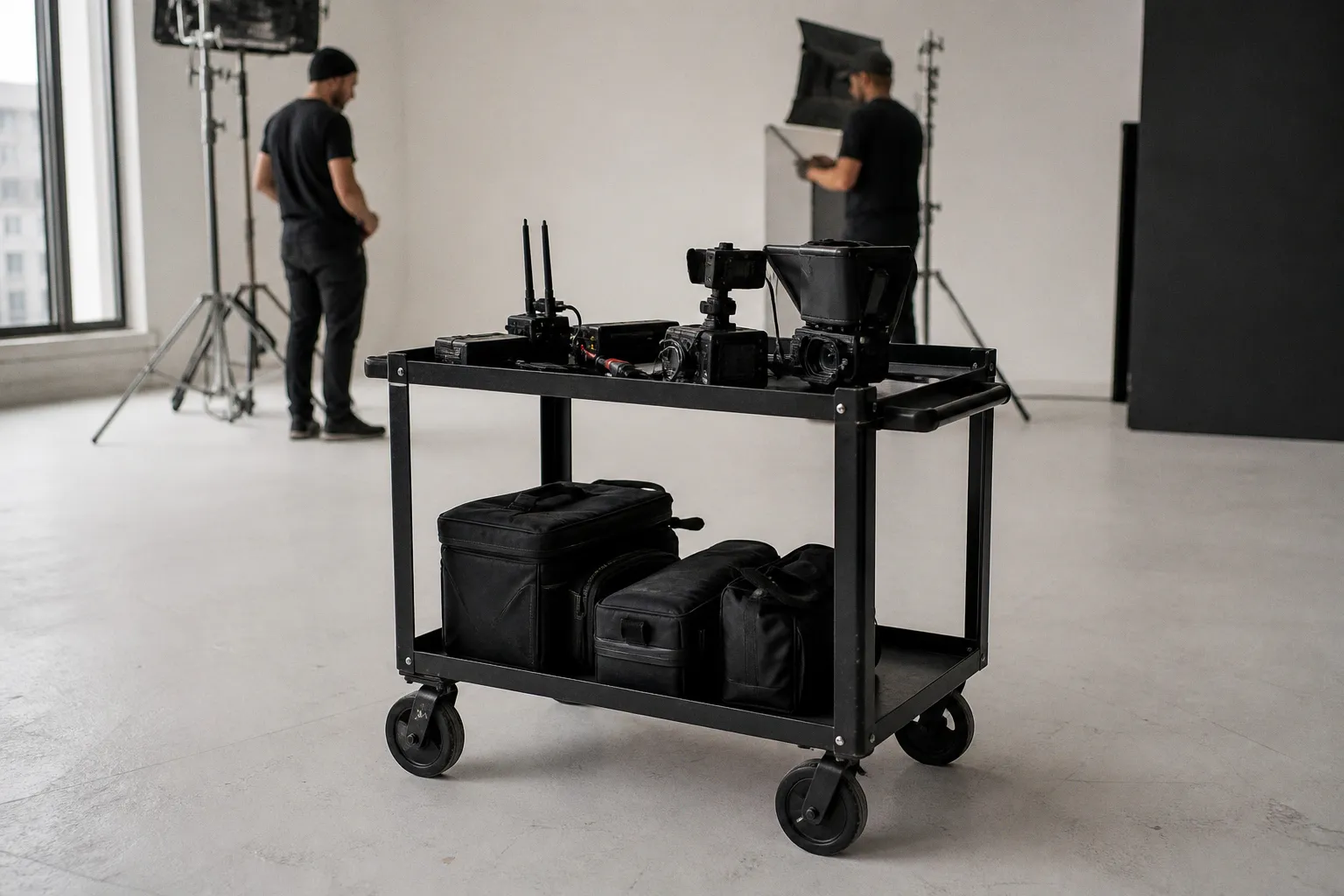
The core metric is not aesthetics. It is whether a cart can carry the camera department’s working load without requiring a truck, a dedicated cart case, or a separate build station.
Newsshooter also notes a timing anomaly worth keeping in view: Falabella has reportedly been available for about a year. Treat the current announcement as a renewed product push, not necessarily a first-release event.
A transport geometry problem, not a camera accessory
Falabella measures 850–1350 mm long, 480 mm wide, and 1050 mm high. Its adjustable length reaches 1.5 m. That range matters for compact camera packages: the cart can be kept short during transport, then extended when cases, monitors, batteries, media, and lens support hardware need a working surface.
The folding claim needs a practical check before purchase:
- Measure the vehicle aperture, not just the cargo bay.
- Confirm whether the folded cart clears other cases and stands.
- Test deployment with the actual wheel set installed.
- Check whether the chosen shelf configuration changes the packed footprint.
A cart that fits “inside a car” is not automatically a one-person load-in solution. The relevant tolerance is the complete package: cart, wheels, shelves, mounted accessories, and flight cases.
Wheel load ratings set the operating envelope
Mule Carts lists three wheel configurations. PU wheels are rated to 70 kg and positioned for studio work. Rubber wheels carry a stated 200 kg maximum load and are described as the more universal option for outdoor shoots. Sand wheels return to a 70 kg rating for beach and snow transport.
Those figures should be read as system limits, not a reason to load the top shelf to the nominal maximum. Camera carts see dynamic forces: curb transitions, ramps, cable runs, loose ground, and sudden stops. The higher-rated rubber configuration is the one to inspect first for mixed-location work, but users should still verify how the load is distributed across the shelves and wheelbase.
The modular DOT system runs on the vertical tubes and accepts accessories at different mounting positions. Newsshooter lists an EcoFlow shelf or C-stand holder, along with long-side case holders. Two shelf heights are available, and two shelves can be used simultaneously. That is useful only if the mounting layout preserves access to batteries, camera bodies, cables, and media. A dense build with poor reach is just a rolling obstruction.
Verify the configuration before assigning it to set
Falabella is listed at $800 in pink, red, tan, black, and light grey. The purchase decision should begin with a configuration sheet: wheel type, shelf count, side-mounted hardware, and the heaviest case expected in normal use.
The key question is binary. If the folded cart, chosen wheels, and loaded workstation all fit the crew’s actual transport and terrain constraints, Falabella is a credible compact-cart option. If any one of those variables fails, the modularity does not correct the workflow.
The same verification discipline applies to fast-moving headlines elsewhere, including reporting on a Trump official’s proposed crypto deal and possible crackdown: distinguish the stated claim from the operational details before making a decision.