your shotgun microphone with boom pole sounds hollow…
Your dialogue sounds like it's coming from inside a tin can. Hollow, phasey, metallic — that unmistakable "speaker trapped in a phone booth" tone that kills indie dialogue takes faster than any other audio failure. You've repositioned the boom. You've swapped cables. You've reached for EQ in post. The hollow tone keeps coming back.
So is the problem the mic, the boom pole, the room — or the physics?
Here's the brutal truth: a shotgun microphone with boom pole is built for open air, and a typical living room, office, or low-ceiling studio is actively working against its core acoustic design. Reach for a shotgun in a small, reflective room and you're asking an interference tube to do its job in a space that physically can't support it. In a large, well-treated space with high ceilings, the same tube behaves exactly as designed. Understanding where that line falls — and which rooms sit on which side of it — fixes the problem for good. And it has nothing to do with buying a more expensive mic.
The interference tube is a physics trick that hates walls
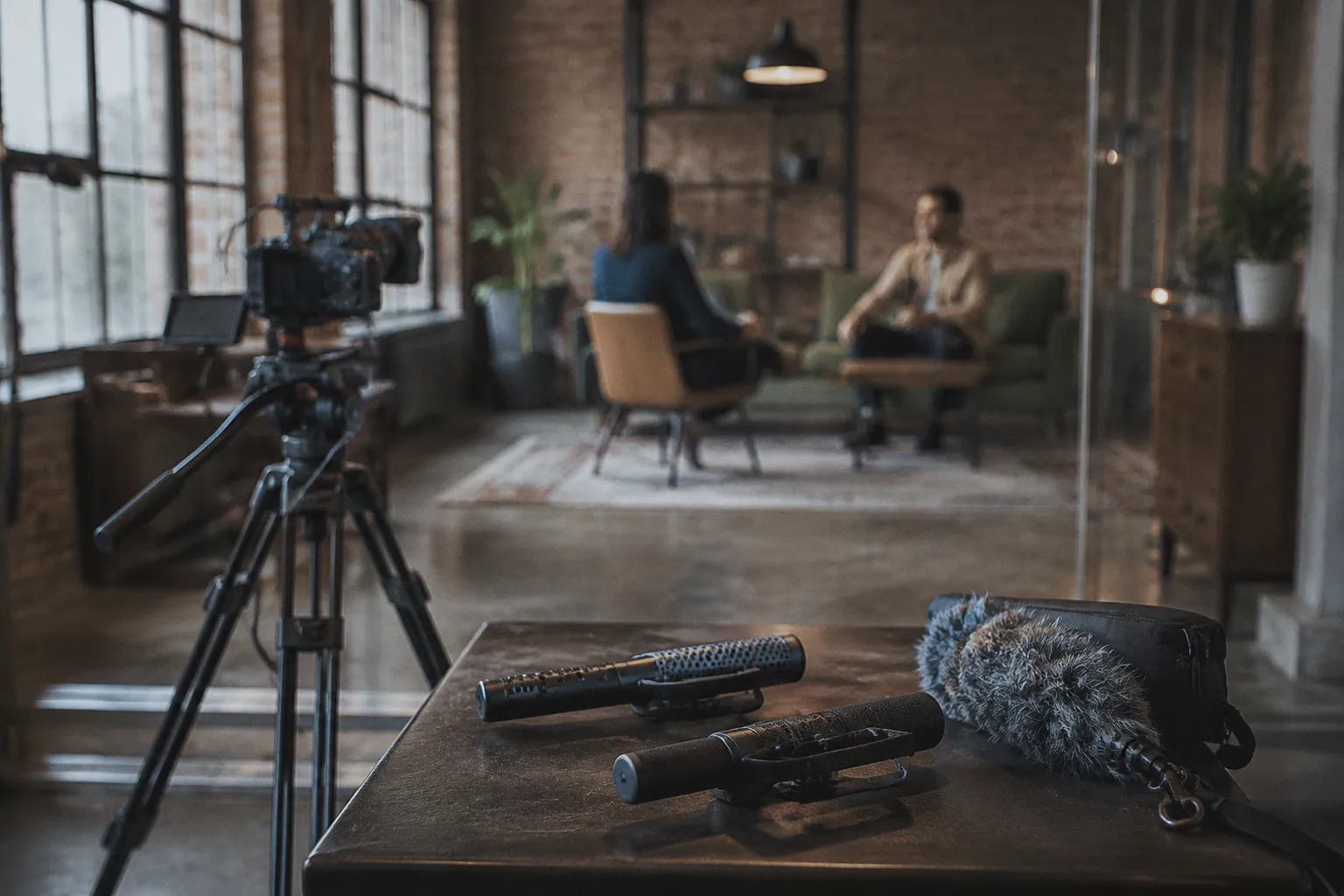
A shotgun microphone doesn't achieve its tight, lobar pickup pattern because of a magic capsule. It achieves it through an interference tube — a long, slotted barrel running the length of the mic body. Off-axis sound waves enter the side slots at slightly different times, and the tube geometry causes those waves to cancel each other through acoustic phase cancellation. What survives is mostly what's directly in front.
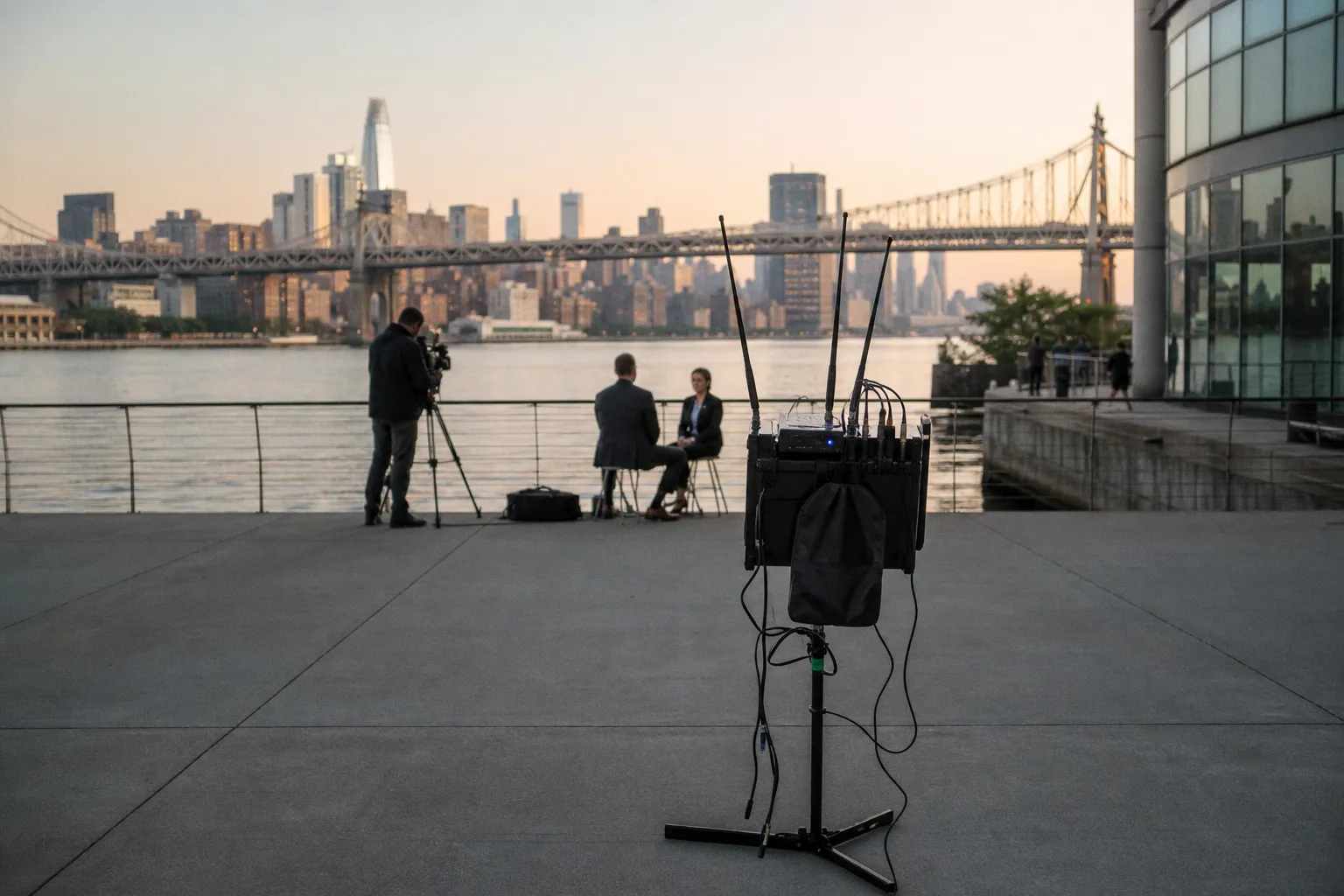
Outdoors, this trick is brilliant. "Off-axis" means distant noise — traffic, wind, crowds a hundred meters away. The tube rejects it cleanly because the off-axis sound arrives at the slots as a predictable, far-field signal.
Indoors, "off-axis" means the walls, ceiling, floor, windows, and that glass conference table three feet from the talent. Every hard surface inside a roughly 20-foot radius is generating early reflections that pour straight into those side slots. The interference tube was designed to cancel distant sound. In a small, hard-walled room, it's drowning in close, loud reflections arriving from every direction. In a treated stage with absorption on the walls and ceiling, those same reflections arrive at a fraction of the level, and the tube does what it was engineered to do. The decisive variable isn't "indoors" — it's how close, and how loud, the first reflections are when they reach the side slots.
The interference tube typically becomes acoustically active somewhere above the 500 Hz to 1,000 Hz crossover range. Below that, the mic behaves more like a standard supercardioid. That's the acoustic window where indoor reflections start doing real damage, and the band where most of the dialogue energy lives.
A shotgun microphone is engineered for open air. In a small, reflective room, it does exactly what it was designed to do — except the room is feeding it the kind of off-axis signal the tube was never meant to handle.
Early reflections and the comb filter trap
When a speaker's voice leaves their mouth and reaches the mic directly, that's the clean signal. When that same voice bounces off a wall and arrives a moment later, that's a delayed copy. The mic captures both.
When a direct sound and its reflection arrive within roughly 1 ms to 25 ms of each other and sit within about 10 dB in level, they interact through interference. The result is comb filtering — deep, regularly spaced dips carved out of the frequency response.
This is what creates the hollow, phasey, "talking from inside a box" sound. Comb filtering doesn't add noise. It carves out frequencies. The audio doesn't sound dirty — it sounds wrong. Voices lose chest warmth, dialogue gets a metallic sheen, and consonants turn brittle. Standard parametric EQ can't fix it because the problem isn't a specific frequency that's too loud or too quiet. The problem is two copies of the same sound arriving at the mic at different times, and your brain — and your recorder — is hearing the cancellation pattern.
Every hard surface in an untreated room contributes. Walls, ceiling, floor, windows, glass tables — most indoor shoot locations are forests of reflectors, and the shotgun's side slots are catching all of them.
| Indoor surface | What it does to a boomed shotgun |
|---|---|
| Bare drywall walls | Strong broadband early reflections, deep comb filter dips |
| Hard floor (wood, tile, concrete) | Direct bounce into the mic's lower side slots |
| Drop ceiling tiles | Diffuse but loud; muddies the low-mid presence |
| Glass windows and doors | Hard, broadband reflections, sharp high-frequency comb |
| Bookshelves, cluttered walls | Slight diffusion — still problematic above 500 Hz |
| Fully treated sound stage | Reflections controlled; shotgun behaves close to spec |
The hardware isn't broken. The room signature is winning.
The rear lobe nobody talks about — and the ceiling that betrays you
Most shotgun users chase the front rejection. The rear lobe gets ignored. That's a mistake indoors.
Shotgun microphones have a rear pickup lobe — the polar pattern behind the mic isn't silent. It's actually fairly sensitive to sound arriving from behind, particularly at low frequencies. Outdoors, that doesn't matter. There's nothing back there except distance. Indoors, there's almost always a ceiling. And often, that ceiling is low.
When you boom a shotgun in a room with an 8-foot ceiling — typical residential or office height — the rear lobe of the mic is pointed roughly upward, straight at that plaster. Every word the talent speaks bounces off the surface above them, arrives at the rear of the mic with full bass energy, and competes with the direct voice signal.
This is where the muddy, boomy quality in indoor shotgun tracks comes from. It's not the front reflections alone. The front reflections carve comb filter dips in the midrange, while the rear lobe simultaneously pumps low-frequency ceiling reflections into the signal. You get hollow mids and muddy bass in the same take, and EQing one makes the other worse.
Raise the ceiling to fifteen or twenty feet, and the rear lobe loses most of its bite. Distance is free attenuation. Add a full ceiling of broadband absorption, and the rear lobe stops mattering altogether. This is why the same shotgun model performs brilliantly on a Hollywood sound stage and terribly in a home office — the room geometry, not the mic, made the call.
The dividing line is acoustic, not categorical. A room with broadband absorption on the walls and ceiling, an RT60 short enough to keep reflections inaudible, and a ceiling height of 12 feet or more gives a shotgun enough room to behave to spec. Below those thresholds, the same mic starts losing its lobar advantage and sounds worse than a much cheaper SDC.
The capsule sits further back than you think — and so does the room
Look at any shotgun mic. The grille at the front looks like the capsule location. It isn't. The actual transducer sits at the rear of the interference tube, often several inches behind the tip.
That physical offset matters indoors. The capsule ends up several inches further from the talent's mouth than the front of the boom pole suggests. Every extra inch between capsule and source raises the ratio of room sound to direct voice. Pull the boom too far back to stay out of frame, and you've guaranteed the room signature dominates the take.
This is why the standard boom distance rule of 12 to 24 inches between mic and mouth isn't stylistic — it's acoustic. Outdoors, you can ride at 24 inches comfortably. Indoors, anything past 18 inches is asking for trouble in a normal room. In a treated stage, you can push back to the full 24 inches and still get clean dialogue.
The boom pole itself contributes another indoor problem: handling noise. Every small cable rustle, every grip adjustment, every footstep on a hardwood floor transmits up the pole and lands directly on the shotgun's high-sensitivity capsule. Indoors, where the room is quiet and the reflection masking is reduced, that handling noise becomes audible in the take. A properly suspended shock mount helps. Heavy indoor windshields are noise — they don't fight wind in a living room, they add comb filtering of their own.
Practical indoor boom discipline:
1. Keep the capsule within 12 to 18 inches of the mouth in a typical room. Past 18 inches and the room wins. On a treated stage, you can stretch further.
2. Angle the mic so the rear lobe points away from the worst reflective surface. Slightly forward and downward beats straight horizontal in low-ceiling rooms.
3. Never aim the mic down a long hard corridor. The interference tube will pull reflections off both side walls straight into the slots.
4. Pad the room before you shoot, not after you record. Hanging duvets, moving bookshelves against bare walls, and throwing a rug over a hard floor changes the acoustic profile instantly and cheaply.
5. Treat the talent's reflective surfaces first. Glass tables, monitors, and hard chair backs within three feet of the speaker are direct early-reflection sources — closer than the walls.
The actual fix: small diaphragm condensers indoors
So what's the fix? Not a better shotgun. A different category of microphone.
For indoor dialogue in a typical room, working audio professionals reach for small diaphragm condenser (SDC) microphones with hypercardioid or cardioid polar patterns. SDCs lack the interference tube entirely. Their directional pickup comes purely from capsule geometry and acoustic design — no slots, no tube, no phase cancellation trick.
That means no comb filtering from reflections entering side slots. No aggressive rear lobe grabbing ceiling reflections. The capsule sits at the front of the mic body, directly facing the talent, much closer to the mouth than any shotgun can manage.
| Parameter | Shotgun indoors | SDC (cardioid / hypercardioid) indoors |
|---|---|---|
| Off-axis rejection method | Interference tube (phase cancellation) | Capsule geometry (pressure gradient) |
| Side slot sensitivity | High — catches room reflections | None — no slots exist |
| Rear lobe behavior | Strong, low-frequency sensitive | Pattern-dependent, generally tighter |
| Capsule location | Rear of interference tube | Front of mic body |
| Practical working distance indoors | Struggles past 18 inches | Performs well at 8 to 18 inches |
| Off-axis reflection handling | Triggers comb filtering | Naturally smoother roll-off |
| Ideal environment | Exterior, treated stages, large open sets | Indoor dialogue, untreated rooms |
The result isn't just "less hollow." It's a fundamentally different relationship with the room. SDCs handle off-axis reflections the way human hearing does — present in the sound field, but not carving holes in the frequency response. The room still contributes its acoustic signature, but as part of the natural mix rather than as comb filter artifacts.
For boom-mounted indoor dialogue, a hypercardioid SDC gives you shotgun-like directionality without shotgun-like reflection problems. They're short, light, easy to boom, and they don't need to be expensive to outperform a shotgun in a small room.
If a production absolutely requires a shotgun visual — say, a long lens where the boom can't physically get close — pairing it with aggressive ceiling absorption and heavy wall treatment can rescue some of the sound. The physics don't bend in a small room, but the room signature can be damped enough that the shotgun performs closer to spec. Don't believe any plugin that claims it can undo comb filtering in post. The cancellation pattern is baked into the waveform. You can mask it, you can re-EQ around it, you cannot reconstruct the frequencies that two out-of-phase copies of the same sound deleted.
Comb filtering doesn't add a problem — it removes one. The information is gone before it ever reaches the recorder.
The next move
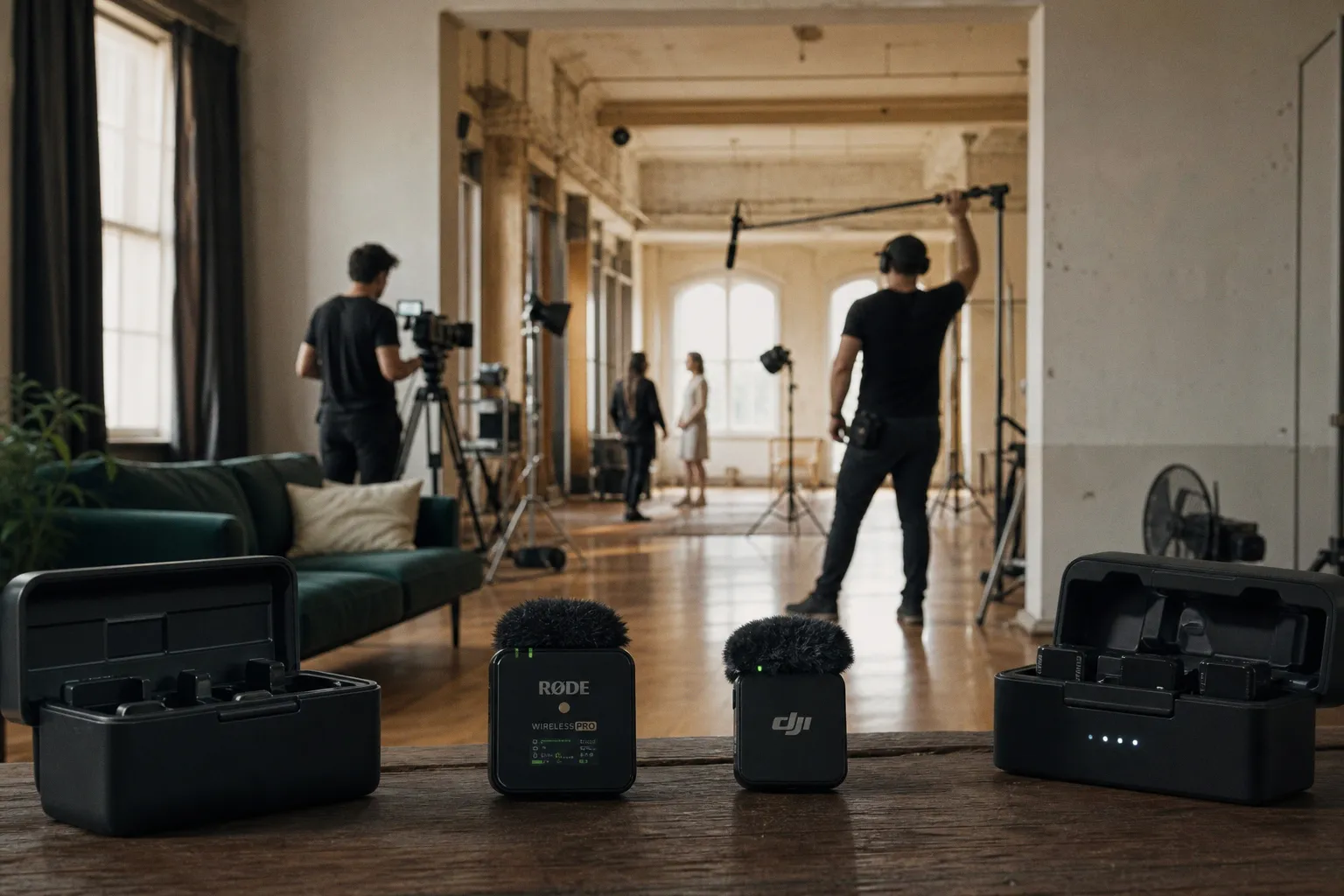
Audio capture indoors is moving toward the same modular flexibility camera and lighting workflows already use. Match the transducer to the environment, not to tradition. The shotgun microphone with boom pole remains the right tool for exterior dialogue, wide open spaces, and treated sound stages. In a small, reflective room, it's the wrong tool. Pencil condensers for boomed dialogue, lavs for hidden positions, and active room treatment for the space itself — that's the modern indoor stack.
The hollow audio isn't a mystery. It's physics — and the fix is already on the shelf.