Sony FX5 Cinema Line Camera: 5K Open Gate and Internal RAW Capabilities
Per Sony UK's product announcement, the full-frame body packs a stacked CMOS sensor, 5K Open Gate recording, and internal X-OCN RAW — three specifications that up to now required stepping into the…
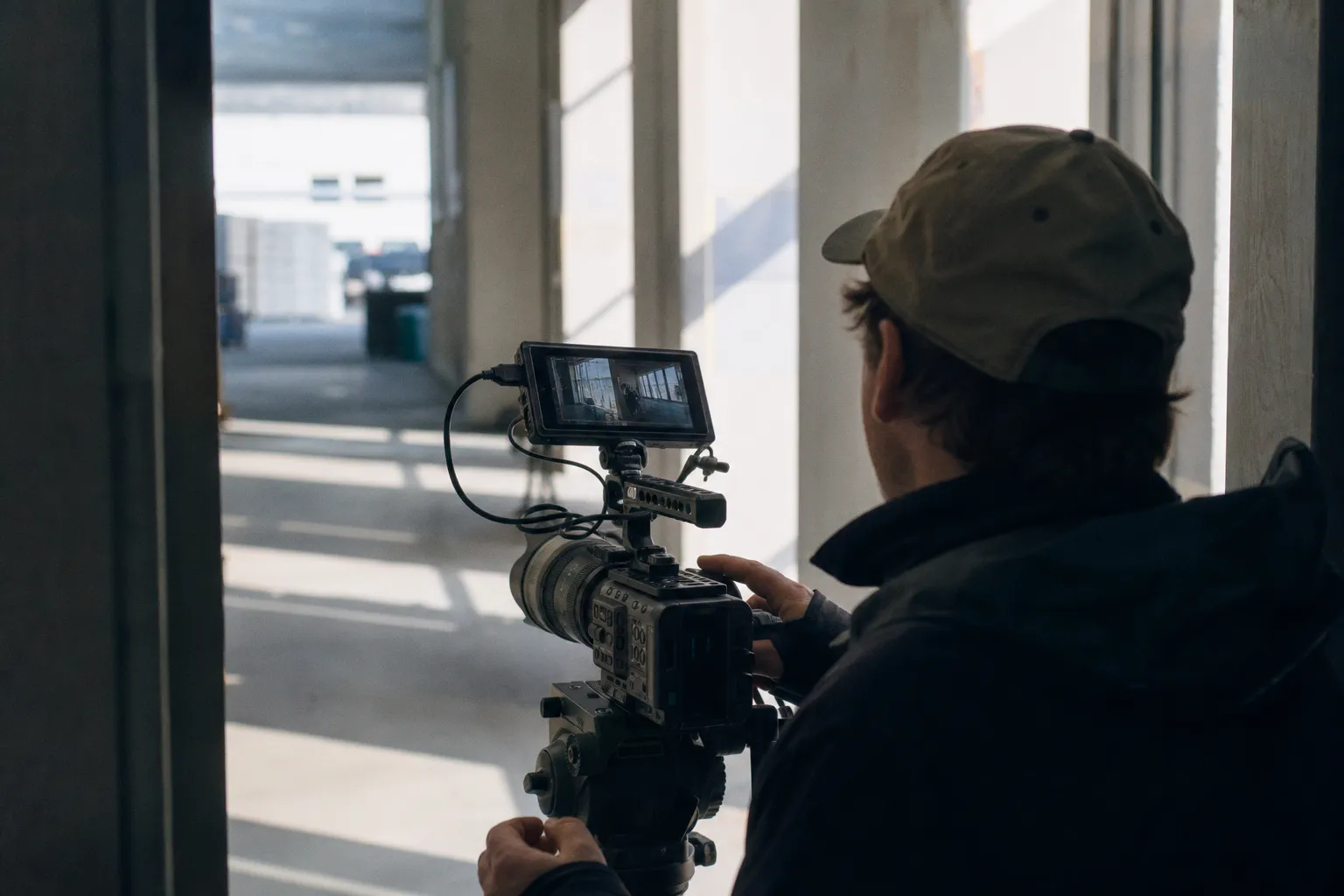
Sony has officially positioned the FX5 as the missing middle in its Cinema Line. Per Sony UK's product announcement, the full-frame body packs a stacked CMOS sensor, 5K Open Gate recording, and internal X-OCN RAW — three specifications that up to now required stepping into the FX6 chassis or external recorders. Claimed dynamic range exceeds 15 stops, and triple base ISO architecture arrives in this form factor for the first time. For shooters straddling documentary and scripted work, the spec sheet alone warrants a hard look.
Spec Sheet: What the Numbers Actually Mean
5K Open Gate is the headline. Full sensor readout at roughly 5120 pixels wide gives editors maximum reframing latitude — a practical advantage for multi-delivery pipelines shooting 16:9, 2.39:1, and vertical cuts simultaneously. Internal X-OCN RAW eliminates the Atomos dependency for those who want linear capture without ProRes RAW's licensing friction. The stacked CMOS design suggests faster readout speeds, which should translate to reduced rolling shutter artifacts in whip pans — though independent measurements won't surface until review units ship.
Triple base ISO is the second critical metric. Sony's implementation across Cinema Line has historically meant two usable gain stages; three indicates a more granular noise-floor strategy. The question: what are the actual IRE values at each stage? Until lab-tested noise floor data drops, manufacturer claims of "15+ stops" remain marketing tolerances, not measured yields.
Positioning and Trade-offs
The FX5 slots between the FX3 (compact, single-operator) and the FX6 (shoulder-mount, broadcast-adjacent). That means it likely inherits the FX3's form factor constraints — no built-in ND filtration, limited physical I/O — while pushing toward FX6-level internal recording codecs. If the body truly carries X-OCN internally without thermal throttling, it solves a real workflow problem for indie cinematographers who can't afford the FX6's footprint but need RAW capture on set.
What's absent from the announcement: lens mount confirmation (E-mount is assumed but unlisted), maximum frame rates at 5K, media type and write-speed requirements for sustained RAW, and whether the triple ISO stages align with cinema-standard exposure values or consumer-tier amplification. Those gaps matter more than the headline specs.
What to Verify Before Committing
Independent dynamic range testing is the first checkpoint — Sony's "15+" needs to hold up against CineD or similar lab methodology. Rolling shutter measurements in milliseconds, not relative terms. Thermal management under sustained 5K RAW recording. Media compatibility and per-minute file sizes for production budgeting. And critically, whether the internal X-OCN implementation matches the color science pipeline of the FX6 and FX9, or if this introduces a new gamut to manage in post. The spec sheet looks promising on paper. The tolerances — as always — will be in the test results.